
 GROWTH GUIDE
Small Businesses: Templates & Workflow to Respond to Negative Reviews
Respond publicly within 24 to 48 hours with a short, empathetic apology, a concrete next step, and an offer to keep working the problem through a phone call or email. Skip the excuses, skip the argument, and never post a customer’s private information. That’s the whole playbook in one move. Everything else, templates, platform quirks, removal requests, and the workflow to make this repeatable, is detail on top of that one habit.
TL;DR:
- Responding within 24 to 48 hours is crucial, as customers expect quick replies and late responses appear indifferent.
- Public replies should acknowledge specific issues, avoid defensiveness, and propose clear offline solutions to rebuild trust.
- Signing replies with a real name and role increases accountability, as nearly 40% of dissatisfied reviewers seek a genuine apology.
- Templates should be personalized with key details, and detailed back-and-forth discussions are better handled privately to prevent defensiveness.
- Using centralized reputation management tools improves response speed, consistency, and tracking, reducing chances of missing or delayed replies.
Table of Contents
- How Do You Respond to Negative Reviews the Right Way?
- Templates for the Most Common Negative Review Scenarios
- Do Reply Rules Change by Review Platform?
- When Should You Flag a Review Instead of Replying?
- What Impact Do Responses Actually Have on Ratings?
- Build a Weekly Workflow Your Whole Team Can Run
- What We’ve Learned Managing Reviews for Local Businesses
- Let Service Grower Handle the Review Grind for You
- Sources
- FAQ
How Do You Respond to Negative Reviews the Right Way?
A good reply does five things in roughly four sentences: thank the reviewer for the feedback, acknowledge what went wrong without hedging, apologize like you mean it, offer a specific fix, and invite them offline to finish the conversation. Miss one of those and the reply reads either cold or evasive.
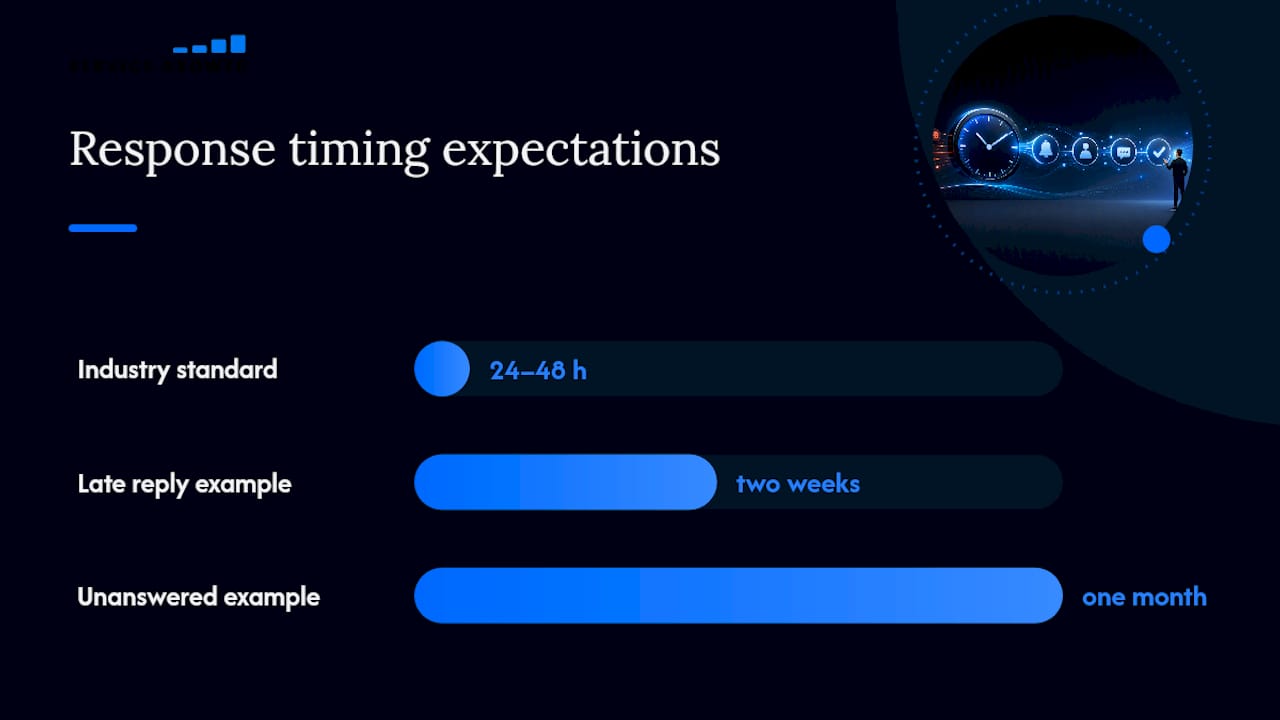
Speed matters more than most owners think. Industry guidance consistently points to a 24 to 48 hour response window as the standard, and customers now expect that turnaround as a baseline, not a bonus. A reply that shows up two weeks late reads as an afterthought, even if the wording is perfect. Set a calendar reminder or a dashboard alert. Waiting for a “good time” to write the perfect response is how a one star review sits unanswered for a month.
Acknowledgment has to come before the apology, and it has to be specific. “We’re sorry you had a bad experience” is filler. “We’re sorry your order arrived cold” tells the reviewer, and everyone reading behind them, that you actually read what they wrote. Harvard Business Review’s research on persuasive review replies found that consumers respond more to replies that admit responsibility for the experience and lay out a concrete next step than to replies that just apologize. Vague regret doesn’t rebuild trust. A specific fix does.
Defensive language is the fastest way to turn one unhappy customer into a public relations problem. Arguing about facts in the comments, quoting your own policy back at someone, or implying the customer misunderstood the situation reads as combative to every future customer scrolling through your reviews, even if you’re technically correct. The review section isn’t a courtroom. It’s a demonstration of how your business handles conflict, and everyone deciding whether to book with you is watching that demonstration.
A few practices consistently undercut trust instead of building it:
- Public refunds or compensation offers. Posting “here’s a $20 credit” invites everyone with a complaint to expect the same, and some platforms treat it as an incentive violation.
- Arguing point by point in the thread. Even a factually accurate rebuttal looks defensive to a reader with no context.
- Sharing account numbers, order details, or names of staff involved. That’s a privacy problem, not just a tone problem.
- Copy-pasting the same reply on every one-star review. Regular readers notice, and it signals nobody’s actually paying attention.
Signing with a real name and title, “Maria, Owner” or “James, Service Manager”, does more work than most business owners give it credit for. It turns a corporate-sounding statement into an accountable human one. Nearly 40% of dissatisfied reviewers are primarily looking for an apology, and an apology lands differently coming from a named person than from “Management.”
Pro Tip: Keep a running note of every reply longer than five sentences. If you find yourself explaining, justifying, or re-litigating the situation publicly, that’s the signal to move the conversation to email or phone immediately.
Templates for the Most Common Negative Review Scenarios
Most effective replies run three to five sentences. Guides that studied high-recovery responses found that short, focused public replies outperform longer public debates, because length signals defensiveness even when the content is reasonable. Save the detailed back-and-forth for a private channel.
One mnemonic worth keeping on a sticky note: L.A.S.T., Listen, Apologize, Solve, Thank. It maps directly onto the structure recommended by reputation guides for keeping public replies compact while still driving the conversation toward a real resolution offline.
The universal template
“Hi [Name], thank you for taking the time to share this. We’re sorry to hear about [specific issue], that’s not the experience we want anyone to have. We’d like to make this right, please reach out to us at [phone/email] so we can [specific action]. Thanks again for the feedback.”
That structure works because it hits every core component (acknowledge, apologize, act, invite offline) without wasting words on excuses. Swap the bracketed details and it covers most situations.
Scenario-specific replies
- Product quality complaint: “Hi [Name], thanks for the honest feedback on the [product]. That falls short of what we expect to deliver, and we’re sorry. We’d like to send a replacement or refund, whichever works better for you, please email us at [contact] with your order number.”
- Late delivery: “Hi [Name], we’re sorry your order arrived later than promised. That’s on us. We’re looking into what caused the delay on our end, and we’d like to make it right, please contact [email/phone] so we can sort out a resolution.”
- Poor staff or service experience: “Hi [Name], thank you for letting us know. This isn’t the level of service we hold ourselves to, and we take it seriously. We’d like to hear more so we can address it directly, please reach out to [manager name] at [contact].”
- Billing dispute: “Hi [Name], we’re sorry for the confusion around your bill. We want to review the charge with you directly, please call [phone number] or email [contact] and we’ll get this sorted quickly.”
- Misunderstanding of policy: “Hi [Name], thanks for flagging this. It sounds like our policy on [topic] wasn’t clear, and that’s a fair point. We’d like to walk through it with you directly, please reach out at [contact] so we can clarify and see what we can do.”
- Suspected fake or spam review: Don’t argue publicly. A brief, neutral reply (“We couldn’t locate a record of this visit under this name; please contact us directly so we can look into it”) preserves your credibility while you pursue removal through the platform’s reporting process.
- Competitor or disgruntled ex-employee attack: Keep the public reply short and factual, no accusations, no speculation, and route the actual dispute through the platform’s flagging system rather than the comment thread.
How the template shifts by business type
A restaurant replying to a food complaint should stay warm and specific: naming the dish, offering a return visit, and keeping it short because diners scanning reviews skim fast. A retail business handling a defective product should lead with the fix (replacement, refund, exchange) since that’s what the reviewer actually wants resolved. A service business, HVAC, salons, fitness studios, benefits from naming the manager who will personally follow up, since service complaints are often about the interaction, not just the outcome.
Across all three, the line to hold is the same: specifics stay public only up to the point of acknowledgment. Order numbers, account details, names of staff members, and financial figures move to a private channel every time.
Do Reply Rules Change by Review Platform?
The core template travels well across platforms, but the fine print doesn’t.
- Google: Replies show up directly under the review and influence local ranking signals as well as first impressions. Keep it professional; Google’s removal process only applies to reviews that violate its content policy, not reviews you simply disagree with.
- Yelp: Yelp is notably strict about incentivized reviews and will flag posts. Never offer a discount or refund in a public reply as a swap for changing the rating.
- Facebook/Meta: Replies are visible to the reviewer’s network, so tone matters even more here, this platform rewards warmth over formality.
- App stores (Apple App Store, Google Play): Replies are shorter by convention and often reference a specific app version or update, since developers use them to signal a bug fix is already shipped.
A public reply is almost always the right first move, it shows every future customer how you handle friction. A direct message or support ticket becomes the better tool once the conversation needs account numbers, refund amounts, or anything that identifies the customer. And across every platform, offering an incentive in exchange for removing or editing a review violates policy, so keep compensation conversations entirely offline.
When Should You Flag a Review Instead of Replying?
Not every one-star review deserves a reply, some deserve a removal request instead. Valid grounds typically include fake reviews from someone who was never a customer, harassment or hate speech, spam or off-topic content, and reviews that reveal private information about staff or other customers.
- Screenshot everything first, the review, the reviewer’s profile, and any prior interaction history, before you report it, in case it disappears or changes.
- Check it against the platform’s actual policy rather than your gut sense of unfairness; “this isn’t true” isn’t grounds for removal on its own.
- File the flag through the platform’s official reporting tool, not by posting a public accusation in the reply.
- Note the date and reference number of your report so you can follow up if there’s no response within a reasonable window.
If you notice a cluster of similar-sounding negative reviews landing within days of each other, treat it as a coordinated attack rather than isolated complaints, and consider legal counsel if the pattern is damaging enough to warrant it. Service Grower’s guide on removing fake Google reviews walks through what documentation platforms actually accept.
What Impact Do Responses Actually Have on Ratings?
Businesses that respond to negative reviews see an average rating increase of 0.12 stars and a 12% increase in positive reviews afterward, according to research from Proserpio and Zervas analyzing how management responses shift review outcomes over time. That’s not a dramatic swing on any single review, but compounded across a year of consistent replies, it moves the overall star average enough that customers notice before they book.
Four numbers are worth tracking on a simple spreadsheet or dashboard:
- Average response time, how many hours pass between a review posting and your reply.
- Reply coverage rate, what percentage of negative reviews actually get a response.
- Rating delta, how your average star rating moves month over month.
- Reviewer follow-up rate, how many dissatisfied customers update or add to their original review after you responded.
That last metric is the one most businesses skip and shouldn’t. A reviewer who edits a one-star review up to three stars after a resolved complaint is a stronger trust signal to future customers than a five-star review from someone who never had a problem in the first place.
Build a Weekly Workflow Your Whole Team Can Run
Templates only work if someone actually applies them on schedule. A simple triage rule solves most of the chaos: one-star and two-star reviews get a reply within 24 hours from a manager, three-star reviews get a reply within 48 hours, and anything mentioning safety, discrimination, or legal threats gets escalated to ownership immediately, no exceptions.
Build the week around four steps: monitor daily, respond inside the SLA, escalate anything unusual, and log the root cause of every complaint in a shared sheet. That last step turns individual reviews into an internal feedback loop, three complaints about the same wait time in a month is a staffing problem worth fixing, not three unrelated bad nights.
Templates keep replies fast and consistent, but they shouldn’t read identical. Swap in the customer’s name, the specific issue, and one detail from their review before you post, that’s the difference between a template and a form letter. For recurring complaint types, a lightweight internal audit process, similar to the creative review workflows marketing teams use to catch recurring issues before they scale, helps spot patterns before they show up as three-star trends.
A few habits worth locking into your process:
- Assign one owner per review platform so replies don’t fall through the cracks between team members.
- Review your root-cause log monthly, not just when a bad review shows up.
- Never let a template go out unedited, five seconds of personalization changes everything.
Pro Tip: Keep last month’s most-used template phrases in a shared doc and rotate the wording every few weeks. Repeat customers occasionally read your reply history, and identical phrasing across a dozen reviews looks copy-pasted even when the sentiment is genuine.
Manually tracking response times, reply status, and follow-up outcomes across Google, Yelp, and Facebook gets unmanageable fast once volume grows. That’s the exact gap Service Grower’s reputation management tools are built to close, centralizing review alerts so nothing sits unanswered past your SLA.
What We’ve Learned Managing Reviews for Local Businesses
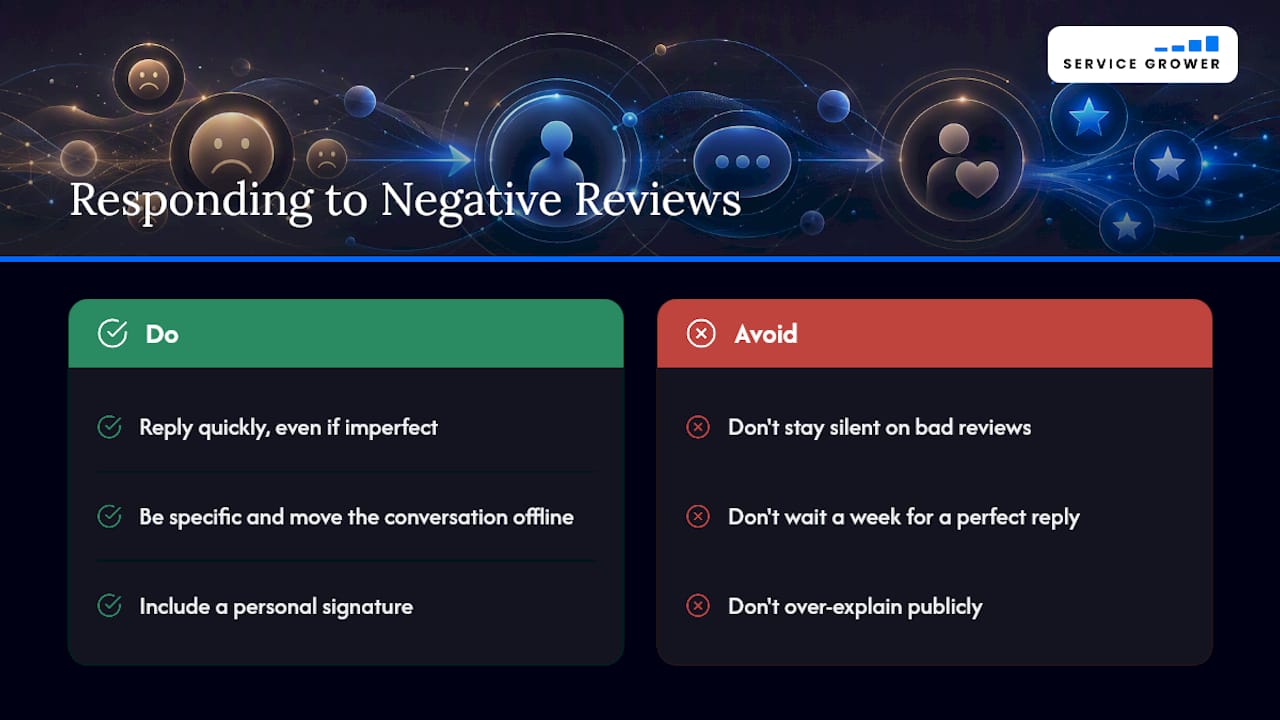
The biggest mistake we see isn’t rudeness, it’s silence. Business owners who ignore a bad review because “it’s not worth the argument” are the ones who lose the most, because a review with no reply sits there forever looking unaddressed. A short, imperfect reply almost always beats a well-crafted one posted a week too late.
We’ve also noticed that owners overestimate how much detail a public reply needs and underestimate how much a signature matters. The customers who update their reviews after a resolution are rarely responding to eloquence, they’re responding to feeling like an actual person read their complaint and did something about it. That’s the pattern our templates and workflow checklist are built around: fast, specific, human, and quick to move offline.
— Service Grower
Let Service Grower Handle the Review Grind for You
Chasing reviews across Google, Yelp, and Facebook with separate logins and no shared history is how replies slip past the 48 hour window in the first place. Service Grower centralizes that entire process, review alerts, reply tracking, and response history, into one inbox so nothing sits unanswered while you’re busy running the business.
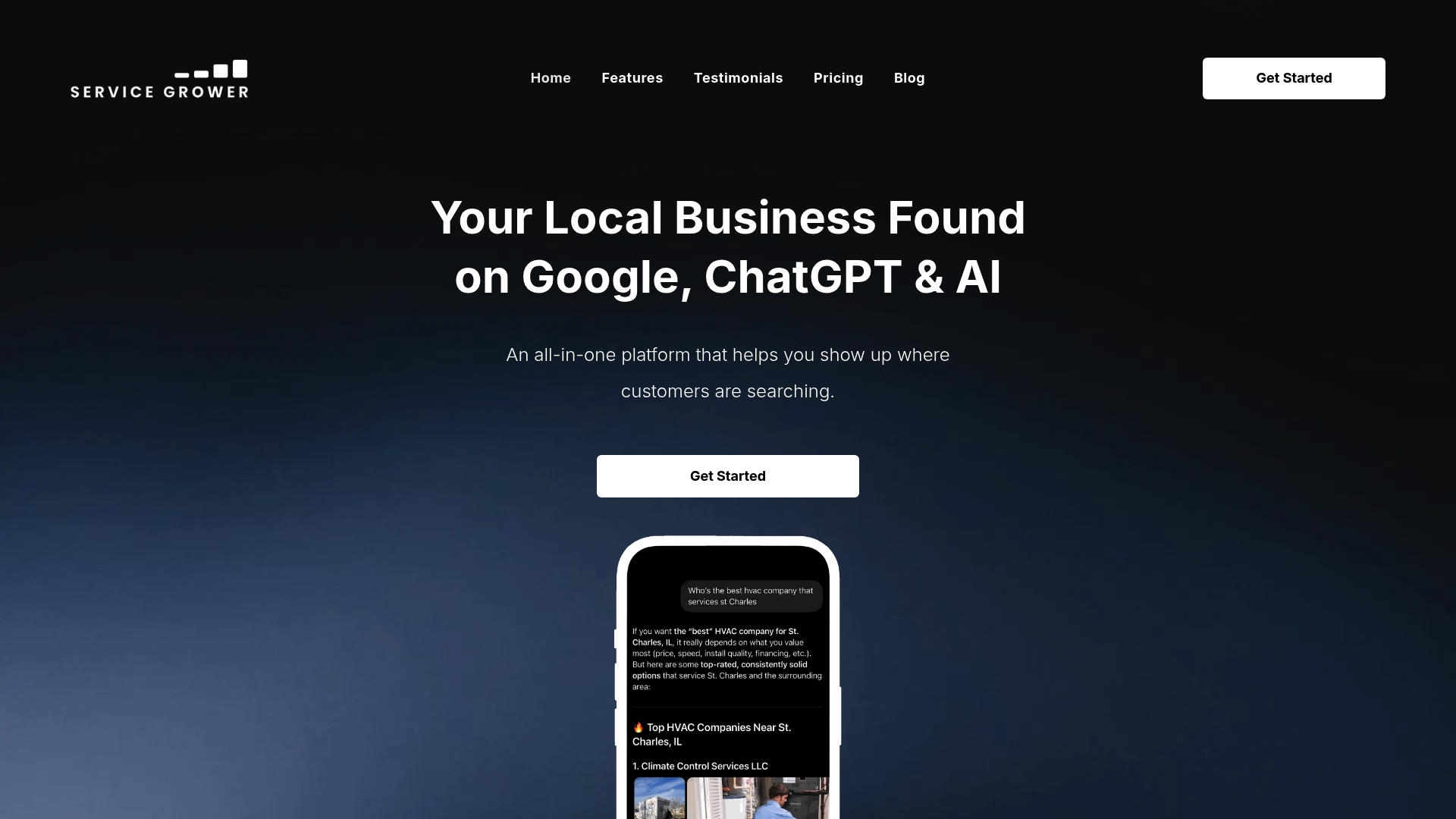
Three things this actually saves you: hours spent logging into separate platform dashboards every day, the drift in tone that happens when three different employees reply without a shared playbook, and the blind spots that come from not knowing your reply coverage rate until a bad month already happened. The Reputation tools inside Service Grower’s platform pull every new review into one place and flag anything past your response window before it becomes a pattern customers notice.
If you’re not sure how your current review coverage stacks up, start with a free Google Business Profile check to see where the gaps actually are before you build a workflow around guesswork.
Sources
- Proserpio & Zervas (2017) — review response impact study
- Harvard Business Review — What consumers find persuasive in online reviews
- AWeber — How to respond to negative reviews online (7-step template)
- Search Engine Land — How to handle negative Google reviews
FAQ
How can I turn a bad review into a positive?
Respond fast with a specific apology and a real next step, then follow through privately. A resolved complaint often turns into an updated review, and even when it doesn’t, a thoughtful public reply shows future customers how you handle problems.
What is the best way to respond to negative comments?
Acknowledge the specific issue, apologize without hedging, offer a concrete fix, and invite the person to continue the conversation offline, all in three to five sentences. Sign it with a real name and role rather than a generic “Management.”
What are good negative feedback phrases?
Phrases like “thank you for bringing this to our attention,” “that’s not the experience we want you to have,” and “we’d like to make this right” acknowledge the issue without sounding defensive or scripted. Avoid phrases that shift blame back onto the customer, even subtly.
How fast should I respond to a bad review?
Industry guidance points to a 24 to 48 hour window as the standard for negative reviews, with the faster end reserved for one and two-star ratings. Waiting longer than that reads as inattentive even if the eventual reply is well written.