
 GROWTH GUIDE
5–10 Google Reviews a Month for Local Businesses with Link and QR
The single best way to get Google reviews is to hand customers a direct review link or QR code at the exact moment they’re satisfied, then back it up with one short automated text or email within a few hours. Do this consistently, follow Google’s rules against incentives, and most small businesses can expect a steady 5 to 10 new reviews a month without ever risking a penalty.
TL;DR:
- Using verified Google Business Profile features, you can generate review links and QR codes in two minutes for placement on receipts, signage, or emails.
- Asking for reviews immediately after customer satisfaction and sending follow-up requests within two to six hours significantly increases response rates.
- Avoid offering incentives or gating reviews based on ratings to comply with Google’s strict policies and prevent profile penalties.
- Regularly monitor and respond to reviews, acknowledging positive feedback and addressing concerns publicly to boost trust and improve local search rankings.
- Automated tools and consistent review requests create a steady flow of five to ten reviews monthly, outperforming sporadic, manual efforts that often stall under busyness.
Table of Contents
- How Do You Get More Google Reviews This Week?
- How Do You Create a Google Review Link and QR Code?
- When Should You Ask, and What Should You Say?
- What Are Google’s Review Rules, and What Happens If You Break Them?
- How Do You Respond to and Track Your Google Reviews?
- Service Grower Perspective: Steady Beats Sporadic
- How Service Grower Handles This For You
- Sources
How Do You Get More Google Reviews This Week?
You don’t need a new strategy. You need to stop overthinking the process and run five things on repeat, starting today.
- Put a QR code at the point of satisfaction. A tablet at checkout, a QR sticker on the counter, or a code printed on the receipt catches customers when their opinion of you is highest.
- Automate the follow-up. Send a text or email using your Business Profile short link within a couple of hours of service. This one habit does more for review volume than almost anything else.
- Give your staff a script. Something as plain as “If you have a minute, we’d really appreciate a quick Google review, here’s the link” outperforms an awkward, improvised ask every time.
- Reply to every review you get, then reuse the good ones. A five star review sitting unanswered is a wasted marketing asset.
- Never offer anything in exchange for a review. No discounts, no giveaways, no “leave us five stars and get 10% off.” Google treats this as fake engagement and can penalize your profile.
Pro Tip: Batch your requests in small, steady waves rather than blasting your entire customer list at once. A sudden spike of 40 reviews in one week can look inorganic to Google, even when every review is real.
How Do You Create a Google Review Link and QR Code?
Google lets verified business owners generate a direct review link and downloadable QR code straight from the Business Profile dashboard, and the whole process takes about two minutes.
- Log into your Google Business Profile on desktop.
- Go to the “Read reviews” section.
- Click “Get more reviews.”
- Copy the direct link, or download the QR code image.
- Paste that link into your email footer, SMS templates, and invoices; print the QR code on receipts and countertop signage.
Where you place it matters as much as having it. The best-performing spots are:
- Printed receipts handed over at checkout
- The thank-you screen or confirmation page after an online purchase
- Post-service invoices, especially for HVAC, contractors, or home service providers
- The first line of a post-purchase email, before any other content
If you use a shortened version of the link through a tool like Bitly, you can track click volume separately from Google’s own review count, which helps you see where the bottleneck lies in the review process. And if “Get more reviews” doesn’t show up in your dashboard, it usually means your listing isn’t fully verified or you’re logged in without owner or manager access. Fix that first.
When Should You Ask, and What Should You Say?
Timing beats almost every other variable in this process. Asking in person at the moment a customer expresses satisfaction, such as after a haircut or a repair, converts far better than any digital request sent cold.
For the digital follow-up, send it within 2 to 6 hours of service completion when possible. Wait a day and the moment has already faded from memory. If you don’t get a response, one polite reminder 3 to 5 days later is enough. Sending a second or third follow-up usually just annoys people and drives them to ignore future requests entirely.
On channel choice: SMS tends to get opened fast in the U.S., which makes it a strong first move for service businesses with a customer’s phone number on file. Email works as a reliable fallback, especially for e-commerce or appointment-based businesses that already communicate that way. QR codes shine for walk-in retail and restaurants where the customer is standing right in front of you.
Keep the message itself short, personal, and specific. A few templates that stay well inside Google’s rules:
- SMS: “Hey [Name], thanks for stopping by [Business]! If you have 30 seconds, we’d love a quick Google review: [link]”
- Email: “We hope you’re happy with your recent [service]. Reviews from customers like you help other people in [area] find us. Here’s the link if you have a moment: [link]”
- Verbal: “If you’ve got a second later today, a Google review would mean a lot to us, here’s the link.”
Pro Tip: Ask every customer, not just the ones who seemed happiest. Selectively asking only satisfied customers is a form of review-gating, and it’s exactly the pattern Google’s enforcement systems are built to catch.
What Are Google’s Review Rules, and What Happens If You Break Them?
Google’s policy is direct: no incentivizing reviews, no gating who gets asked based on their likely rating, and no requesting a specific star rating from anyone. Offering a discount, freebie, or contest entry in exchange for a review counts as fake engagement, even if the review itself is genuine and glowing.
Violating these rules can get individual reviews removed, trigger profile restrictions, or in repeat cases, draw a formal warning against your listing. None of that is worth the short-term bump a $5 gift card might buy you.
A few operational habits keep your program clean:
- Ask every customer who completes a transaction, not a cherry-picked subset
- Send requests from your own systems, never from the customer’s device or account
- Space out request batches instead of mass-emailing your entire customer history at once
- Report fake or clearly abusive reviews through your Business Profile rather than arguing with them publicly
Steady, recent reviews also carry weight beyond trust. Recent review activity and volume function as a ranking signal for local search, which means a business asking consistently tends to outrank one sitting on a pile of two-year-old reviews.
How Do You Respond to and Track Your Google Reviews?
Check your reviews on a weekly rhythm. Businesses with a single location can do this straight from the Business Profile dashboard; businesses managing several locations get real value from the Business Profile API, which returns review arrays, average rating, and total review count programmatically so nothing slips through at scale.
Replying matters more than most owners assume. Google itself notes that balanced, honestly managed feedback, paired with prompt owner responses, builds consumer trust rather than scaring customers off.
- Positive reviews: Thank the customer by name, mention something specific from their comment.
- Neutral reviews: Acknowledge the concern, offer a way to make it right.
- Negative reviews: Apologize briefly and publicly, then move the conversation offline. Never post private customer details in a public reply.
With permission, repurpose strong reviews as testimonial embeds, social posts, or landing page proof. Track two numbers monthly: review velocity (new reviews per month) and response rate (percentage answered within a week).
| Metric | What to track | Why it matters |
|---|---|---|
| Review velocity | New reviews per month | Signals ongoing activity to customers and Google |
| Response rate | Percentage of reviews replied to within a week | Builds trust and shows an active, managed profile |
| Average rating trend | Rolling average | Flags service issues before they compound |
| Click through on review link | Clicks vs. completed reviews | Reveals if the bottleneck is asking or converting |
A weekly reputation management routine built around these two numbers catches problems long before they show up in your overall rating.
Service Grower Perspective: Steady Beats Sporadic
Most owners chase a big one-time push, twenty reviews in a week, then nothing for three months. That pattern doesn’t build local visibility the way a steady drip of 5 to 10 reviews monthly does. Automation is what makes steady possible; a manual ask-and-hope system burns out after the first busy week. Integrated reply workflows close the loop, because a review nobody answers is only half the job done.
— Service Grower
How Service Grower Handles This For You
Running the ask-follow-up-reply loop by hand works for a while, then it quietly stops happening once things get busy, which is exactly when review requests matter most. Service Grower is built for local business owners who want that loop running automatically instead of depending on someone remembering to send it.
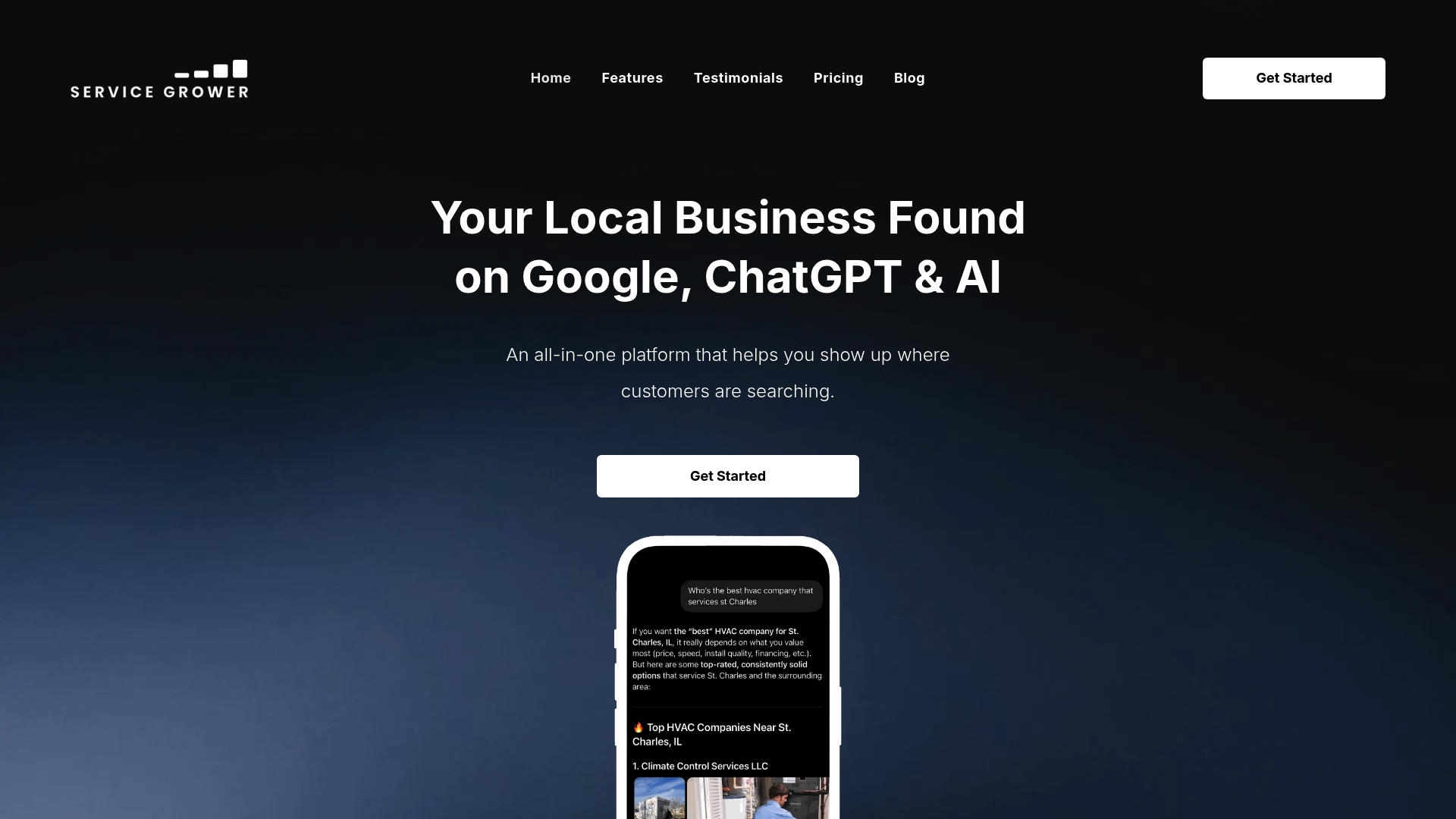
The platform’s Review Management tools handle the request-and-reply cycle so nothing falls through when your team gets slammed. SmartRequest automates the timed follow-up text or email after every service call, and a website keeps your review link visible everywhere a customer might land, from your homepage to your booking confirmation. Reporting tools can track your review velocity and response rate over time, important numbers for understanding whether your local visibility is climbing or stalling.
If you want to see what a done-for-you version of this looks like for your business, visit Service Grower’s review growth page and get a quote on setting it up.
Sources
- Create a Google link or QR code to request reviews
- How to Get More Google Reviews for Your Business (Legal, 2026 Guide) | ReplyWithCare