
 GROWTH GUIDE
Win Customers in 30 Days: Small Business Action Plan
The fastest way to win customers is to fix discovery, cut friction from your offer, and deliver value in the first interaction, not the tenth. Start with three moves: correct your Google Business Profile and local listings, launch one referral offer with a specific incentive, and build a single-page booking CTA that takes under a minute to complete. Do those three things well and most small businesses see a measurable lift in leads or bookings inside 30 days.
TL;DR:
- Fix your Google Business Profile and local listings in the first 30 days to improve visibility and generate leads or bookings quickly.
- Launch a referral program with a tracked incentive to drive new customers at low cost, ensuring consistent promotion for ongoing results.
- Use simple, one-CTA landing pages with quick forms and automated follow-up to convert more inquiries into bookings promptly.
- Build a straightforward loyalty program focused on delivering early rewards and easy actions like reviews and referrals to increase customer retention.
- Segment and personalize win-back campaigns for lapsed customers, using time-limited offers and tracking to recover high-value clients effectively.
Table of Contents
- Top Tactics to Attract and Win Customers
- How Do You Turn Interest Into Paying Customers?
- How Do You Keep the Customers You Already Won?
- How Do You Win Back Customers Who Stopped Buying?
- The Metrics That Actually Tell You What’s Working
- Your 30/60/90-Day Action Plan
- What We’ve Learned Helping Local Businesses Win Customers
- Ready to Fix the Discovery Gap Yourself?
- Sources
Top Tactics to Attract and Win Customers
Not every acquisition tactic deserves equal time from a five-person team. Here’s the order that produces results without draining a week of owner hours.
- Structured referral program. Give both the referrer and the new customer a specific reward, a discount, a free add-on, a gift card. Track it with a unique code or link so you know which referrals actually convert, not just which ones get shared.
- Local and AI search visibility. Your Google Business Profile, website content, and structured data need to answer the exact question a nearby customer is typing or asking a chatbot. A wrong phone number or a stale service list quietly kills bookings before a customer ever calls.
- Low-budget paid ads with retargeting. Set a firm weekly cap, target a five to ten-mile radius, and retarget anyone who visited your site but didn’t book. Retargeted visitors convert at a noticeably higher rate than cold traffic because they already know who you are.
- Social proof: reviews, user content, and micro-case studies. A handful of recent, specific reviews (not five hundred generic ones) does more for trust than volume alone.
- Risk-free first-visit offers. A free consultation, a discounted first service, or a trial period lowers the psychological cost of trying someone new.
Quick notes on effort versus payoff:
- Referral programs cost little but require consistent promotion. Many owners do not ask enough.
- Local listing fixes take an afternoon and pay off for months.
- Paid ads need weekly attention or they bleed budget on the wrong keywords.
- Reviews compound. Ten reviews this month make next month’s ad spend work harder.
None of this works if your target customer is vague. Before spending on any tactic, write down the specific problem your best customers had before they found you. That single sentence should shape your ad copy, your referral pitch, and your website headline. Guides like QuickBooks’ advice on attracting small business customers point to the same starting point: know exactly who you’re talking to before you spend a dollar reaching them.
How Do You Turn Interest Into Paying Customers?
Traffic and inquiries mean nothing if the path from “interested” to “booked” has too many steps. Most SMB websites lose customers not because the offer is bad, but because the next action is unclear or takes too long on a phone.
Fix the path with these rules:
- Put one offer and one call-to-action per page. A page trying to sell three services confuses visitors into leaving.
- Keep forms to four fields or fewer, and make scheduling instant, not “we’ll call you back.”
- Automate follow-up by email and text within minutes of a form submission, not the next business day.
- Score leads by intent (a booking request outranks a newsletter signup) so your team calls the hottest leads first.
- Offer a chat widget or a quick callback option for visitors who have a question but aren’t ready to fill out a form.
A SmartRequest style instant booking form, one that confirms a time slot without a phone tag, removes the single biggest drop-off point in most local business funnels.
How Do You Keep the Customers You Already Won?
Winning a customer once is cheap compared to what it costs to win them back after they’ve left, so retention deserves at least as much attention as acquisition. Salesforce’s research on customer loyalty makes the underlying math clear: loyal customers buy more often and cost less to serve, but only when the experience stays consistent and easy.
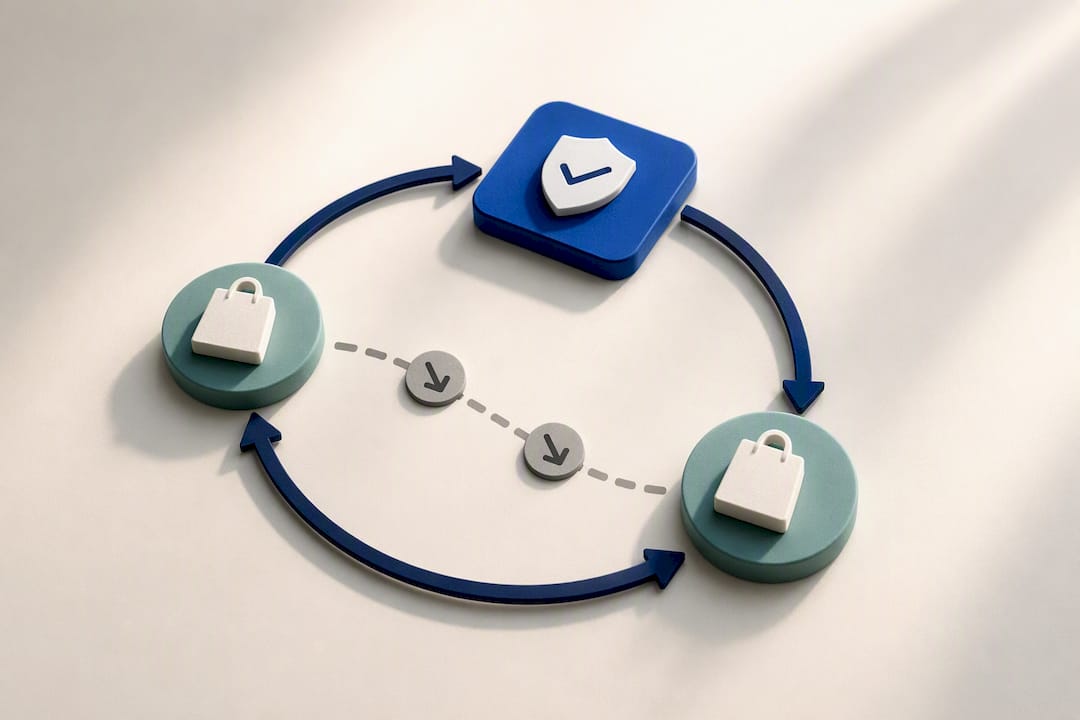
Start with onboarding. The first 30 days should deliver a visible, specific win, not a welcome email and silence. A landscaping company might send a before/after photo after the first visit. A gym might text a check-in after week two. That early proof of value is what outcome-focused business strategy research points to as the real driver of long-term commitment: customers stay when they can see the transformation, not just the transaction.
Loyalty programs work best with simple rules. HubSpot’s guidance on building loyalty programs recommends a fast first reward, letting members earn points for reviews or referrals (not just purchases), and capping tiers at three so the program doesn’t require a spreadsheet to understand.
- Deliver the first reward soon after signup.
- Let non-purchase actions (a review, a referral, a social share) earn points too.
- Close the loop: ask for feedback, act on it, and tell customers what changed.
- Turn your best customers into ambassadors with a simple referral bonus tied to their loyalty tier.
Pro Tip: Send one email or text after every completed service asking a single question: “What almost stopped you from booking with us?” The answers surface friction points faster than any survey tool.
How Do You Win Back Customers Who Stopped Buying?
Lapsed customers aren’t gone, they’re just deprioritized. A segmented approach brings more of them back without training everyone to wait for a discount.
- Sort lapsed customers by how recently they bought and how much they spent, then write a different message for each group. A high-value customer who vanished six months ago needs a personal note, not a mass blast.
- Use time-limited incentives, a service update they haven’t seen, or retargeting ads that remind them what changed since their last visit.
- Track your reactivation rate monthly and set a floor on discount depth so win-back offers don’t quietly train your best customers to wait for a sale. Emarsys’s win-back research points to segmentation and personalization, not blanket discounts, as the difference between campaigns that actually recover revenue.
The Metrics That Actually Tell You What’s Working
Five numbers matter more than any dashboard full of vanity metrics.
- Customer lifetime value (CLV): average purchase value × purchase frequency × customer lifespan.
- Churn rate: customers lost during a period ÷ total customers at the start of that period.
- Retention rate: the inverse of churn, customers retained ÷ customers at the start.
- Customer acquisition cost (CAC): total acquisition spend ÷ new customers gained.
- Conversion rate: customers gained ÷ total leads or visitors.
Early-stage businesses should watch CAC and conversion rate closely. Once you have repeat customers, shift focus to churn and CLV. That shift matters because PwC’s research on brand loyalty found many executives overestimate how loyal their customers actually are, which means gut instinct is a poor substitute for tracking retention directly.
Your 30/60/90-Day Action Plan
Turning tactics into results means putting them on a calendar, not a wish list.
- Days 1 to 30: Correct your Google Business Profile and directory listings, launch one referral offer with a tracked incentive, and rebuild your top landing page around a single CTA.
- Days 31 to 60: Roll out an automated onboarding email sequence, launch a simple points-based loyalty program, and start retargeting ads to site visitors who didn’t convert.
- Days 61 to 90: Optimize ad targeting based on real conversion data, run your first segmented win-back campaign, and review CLV against CAC to decide where to scale.
| Phase | Primary Focus | Success Signal |
|---|---|---|
| Days 1 to 30 | Discovery and first offer | Increase in leads or booking requests |
| Days 31 to 60 | Onboarding and loyalty | Higher repeat visit rate |
| Days 61 to 90 | Optimization and win-back | Lower CAC, higher CLV |
What We’ve Learned Helping Local Businesses Win Customers
We work with local businesses on exactly the problems above: getting found, getting booked, and getting reviewed. Our clients most often see the biggest early wins when their AnswerReady™ website and Google Business Profile finally answer the questions customers are actually asking.
A DIY approach works fine if you have one person who can consistently manage listings, reviews, and follow-up. It breaks down once you’re juggling all three across multiple platforms. That’s where an integrated system, rather than three disconnected tools, tends to save the most time.
— Service Grower
Ready to Fix the Discovery Gap Yourself?
Most of the tactics above assume your business already shows up correctly when someone searches or asks an AI assistant for a service near them. That assumption breaks more often than owners realize, a wrong address, a missing category, or a website that doesn’t answer basic customer questions can quietly cost you every tactic in this article. Service Grower built AnswerReady™ websites and AI presence tools specifically to close that gap, combining visibility management, review tracking, and booking tools like SmartRequest in one platform instead of three separate subscriptions.
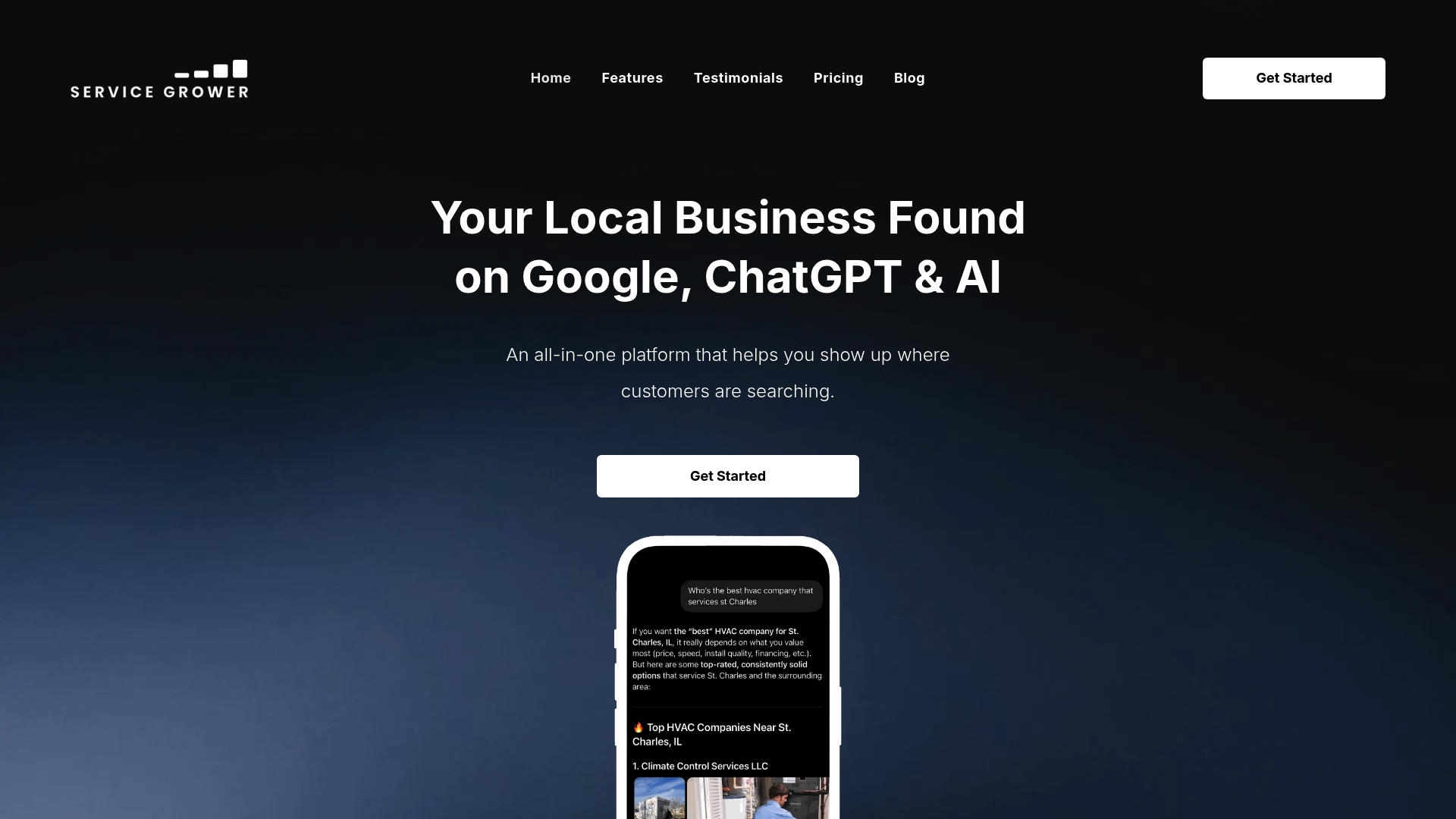
If you’re not sure whether your business is even showing up correctly right now, run a free AI visibility check and see exactly where customers are getting lost before they ever reach your booking form.
Sources
- What You Must Deliver to Win Customers Today (HBR podcast)
- MarketingCharts coverage of PwC loyalty research
- How to start building a customer loyalty program (HubSpot)
- What is customer loyalty? How to build & measure (Salesforce)