
 GROWTH GUIDE
Launch Compliant U.S. SMS Drip Campaigns This Week with Templates
An SMS drip campaign is an automated sequence of short texts designed to nudge a prospect or customer toward a specific action, used for welcome flows, cart recovery, onboarding, and appointment reminders. Each message fires based on a trigger and a delay, so the sequence feels timely rather than random. Done right, it nurtures leads and builds engagement. Done without consent, it is also a legal liability.
TL;DR:
- Collect and log explicit consent from contacts before launching any SMS drip sequence to ensure compliance and prevent legal liabilities.
- Use timely triggers such as cart abandonment within hours or appointment reminders a day in advance to maximize relevance and reduce spam reports.
- Segment contacts by lifecycle stage to tailor messaging, with separate sequences for new leads, loyal customers, or lapsed users, ensuring appropriate contact frequency.
- Limit message volume per contact and follow quiet hours practices, avoiding excessive or intrusive texts that could trigger spam filters or complaints.
- Centralize consent records, messaging, and automation in a single platform to streamline compliance, tracking, and effective execution of SMS marketing campaigns.
Table of Contents
- What makes up an SMS drip sequence
- Drip campaigns marketers can copy and adapt
- How to plan and set up a drip campaign step by step — follow the comprehensive marketing automation checklist for SMBs to cover all essentials.
- Timing and best practices that keep campaigns effective
- Staying compliant: consent, revocation, and carrier rules
- Templates and workflows you can launch this week
- Which metrics actually tell you the campaign is working
- How an integrated platform simplifies execution
- What matters most when you launch
- Getting SMS drips running without building it all yourself
- FAQ
- Sources
What makes up an SMS drip sequence
A drip campaign is not one text, it is a chain of texts tied together by logic. A single SMS blast sends the same message to everyone at once. A drip reacts to what a specific contact does (or doesn’t do) and spaces messages out over days or weeks. That distinction matters for both results and compliance, since each message in a drip still needs its own valid consent trail.
Compared to an email drip, SMS runs on tighter timing and shorter copy. Open rates happen in minutes, not days, so delays are measured in hours, not business cycles.
Most sequences share the same architecture:
- Triggers: a signup, cart abandonment, appointment booking, or completed purchase starts the sequence.
- Delays: the gap between messages, often 1 to 3 days for nurture flows and minutes to hours for cart recovery.
- Branches: conditional paths based on whether a contact clicked, replied, or stayed silent.
- Frequency caps and quiet windows: limits on how many texts a contact gets per day and blackout hours for sending.
- Personalization tokens: first name, product name, appointment time, or last purchase date pulled from a CRM field.
Branching is what separates a basic autoresponder from a real drip: a contact who replies “YES” to a reminder exits the sequence, while one who ignores it moves to a follow-up step.
Drip campaigns marketers can copy and adapt
The same architecture supports very different goals. Here are five patterns that show up across industries.
- Welcome and onboarding series. A new subscriber gets a greeting text within minutes, a feature or benefit highlight on day 2, and a soft offer on day 5. This keeps early engagement high while the contact is still paying attention.
- Ecommerce abandoned-cart sequence. The first nudge goes out 1 hour after abandonment, a reminder with a product reference follows at 24 hours, and a final message with urgency language goes out at 48 to 72 hours. Testing a discount code in the final text against a plain reminder is a common first experiment.
- B2B lead-nurture and demo scheduling. A prospect who downloads a resource gets a follow-up text offering a scheduling link, then a reminder if no booking happens within 48 hours, then a value-focused message if the link goes unclicked.
- Appointment reminders for service businesses. A confirmation text goes out immediately after booking, a reminder arrives 24 hours before the appointment, and a same-day reminder follows 2 to 3 hours ahead with a reschedule option.
- Post-purchase follow-up and upsell. A delivery or service-completion confirmation goes out first, a satisfaction check-in follows a few days later, and a relevant upsell or review request arrives after that, spaced to avoid feeling transactional.
Each of these works because the trigger matches real customer intent. A cart-abandonment text sent a week late reads as spam. A reminder sent an hour before an appointment reads as helpful.
How to plan and set up a drip campaign step by step — follow the comprehensive marketing automation checklist for SMBs to cover all essentials.
Build in this order and you avoid the two most common failures: campaigns that annoy people and campaigns that collect consent incorrectly.
- Set a measurable goal. Decide whether the campaign exists to book appointments, recover carts, or move leads to a sales call, and pick one metric that defines success.
- Collect and store consent properly. Capture prior express written consent with clear opt-in language (for example, “By texting JOIN, you agree to receive marketing texts from [business]. Msg & data rates may apply. Reply STOP to cancel.”) and log the timestamp, source, and exact language shown to the contact.
- Segment contacts and map journeys. Group contacts by lifecycle stage (new lead, active customer, lapsed customer) so each segment gets a sequence that matches where they actually are.
- Define triggers, delays, branches, and frequency caps. Decide what starts the sequence, how long between messages, what happens on reply versus no reply, and the maximum number of texts a contact can receive per week.
- Write short messages with one CTA. Every text should ask for exactly one action and include opt-out instructions.
- Connect CRM, ecommerce, and booking systems. Trigger data has to flow automatically; manual list uploads break timing and create stale consent records.
- Run a pilot before full launch. Send the sequence to a small internal or opt-in test group and check timing, links, and personalization tokens render correctly.
- Do pre-launch QA and deliverability checks. Confirm sender ID registration, test on multiple carriers, and verify the opt-out keyword actually removes the contact.
Pro Tip: Build your consent capture and your CRM field mapping before you write a single message, since a sequence with broken personalization tokens is harder to fix after launch than before it.
Teams that handle lead follow-up across several channels often find it easier to design the SMS sequence alongside their follow-up automation rather than as a separate project, since the same triggers frequently feed both.
Timing and best practices that keep campaigns effective
The gap between a drip campaign that converts and one that gets reported as spam usually comes down to restraint.
- Keep messages short with one CTA. A text with two asks splits attention and lowers click-through on both.
- Match timing windows to the use case. Cart recovery performs best within the first few hours, while nurture sequences can space messages 2 to 4 days apart without losing momentum.
- Personalize with data you already have. First name, appointment time, and product name improve relevance, but pulling in anything a contact did not knowingly share (location history, inferred interests) reads as invasive rather than helpful.
- Respect quiet hours and frequency caps. Avoid sending outside normal daytime hours and cap total weekly volume per contact.
- Build a clear reply-handling policy. A contact who replies with a question, not an opt-out, needs a path to a human, not silence.
Test send time first, then CTA wording, then personalization depth. Each of those, in that order, tends to move the needle before smaller copy tweaks do.
Staying compliant: consent, revocation, and carrier rules

Compliance is not optional paperwork, it is the difference between a working channel and a shut-down number. The FCC’s one-to-one consent rule requires that prior express written consent be obtained separately for each seller before sending a marketing text, closing a loophole that previously let one consent cover multiple unrelated senders; that rule took effect January 27, 2025. Earlier FCC rulemaking already established that texts sent using an autodialer are treated as calls under the TCPA, meaning telemarketing texts to wireless numbers need that same written consent.
Marketers running SMS drips should check each of these before launch:
- Confirm consent language is clear, conspicuous, and specific to your business, not a shared or bundled opt-in.
- Record the timestamp, source, and exact wording shown at the moment of opt-in.
- Honor opt-out keywords (STOP, UNSUBSCRIBE, CANCEL) immediately and stop further marketing texts to that number.
- Check contacts against the National Do Not Call registry where it applies to your sending practice, noting that established business relationships carry specific exemptions.
- Monitor complaint and block rates, since carriers and the FCC have increased filtering of traffic that triggers spam reports, and encourage recipients to forward unwanted messages to 7726 rather than report them as fraud.
Consent rules changed again recently: some revocation-related effective dates have been extended by FCC waiver into 2026 and 2027, so marketers should track current implementation timelines rather than assume a single fixed date applies indefinitely.
Templates and workflows you can launch this week
These four shells cover the most common triggers and can be adapted to your product or service.
- Welcome: “Hi {first_name}, thanks for joining {business_name}! Reply YES for a 10% welcome offer or STOP to opt out.” Send immediately on opt-in; branch to a product highlight if no reply within 24 hours.
- Cart recovery: “Still thinking about {product_name}? Your cart is saved. Reply SHOP to complete your order. STOP to unsubscribe.” Send at 1 hour, follow up at 24 hours if no click.
- Appointment reminder: “Reminder: your appointment with {business_name} is tomorrow at {appointment_time}. Reply C to confirm or R to reschedule.” Send 24 hours and 2 hours before the appointment.
- Post-purchase: “Thanks for your order, {first_name}! We’d love your feedback: {review_link}. Reply STOP to opt out.” Send 3 to 5 days after delivery or service completion.
For each template, branch on reply: a “YES” or confirmation exits the contact to a thank-you step, while silence moves them to a single follow-up before the sequence ends. Test one variable per template at a time, starting with send-time offset, then CTA phrasing.
Which metrics actually tell you the campaign is working
Track a short list of numbers consistently rather than a long dashboard nobody reviews.
- Delivery rate: messages successfully delivered divided by messages sent, a drop here usually signals carrier filtering.
- Click-through rate: clicks on a link divided by delivered messages, your core engagement signal.
- Conversion rate: completed goal actions (booking, purchase, reply) divided by delivered messages.
- Reply rate and opt-out rate: both reveal whether the cadence feels welcome or intrusive.
Watch opt-out spikes and delivery drops together, since both often point to the same root cause: a carrier flagging your traffic. Review results weekly for active campaigns and roll out a winning variant only after it holds up across at least one full send cycle.
How an integrated platform simplifies execution
Running consent capture, segmentation, triggers, and reporting across separate tools is where most compliance gaps start. A platform that centralizes these pieces removes several points of failure at once.
- A customer hub that logs consent timestamps and message history alongside contact records keeps the paper trail intact if a complaint comes in.
- An SMS marketing module tied directly to booking and request forms lets appointment triggers fire without manual list exports.
- Centralized review and messaging workflows mean a post-purchase text and a review request can share the same contact record instead of living in two systems.
Service Grower’s Customer Hub and SMS marketing module are built around this kind of centralized record-keeping, which is the same principle that reduces compliance risk across any drip program.
What matters most when you launch
Get consent right first. Everything else (timing, copy, branching) is optimization, but a bad consent record is a liability you cannot fix retroactively. The most common early mistakes are overmessaging, sloppy opt-in logs, and skipping the pilot test because the launch date felt urgent.
— Service Grower
Getting SMS drips running without building it all yourself
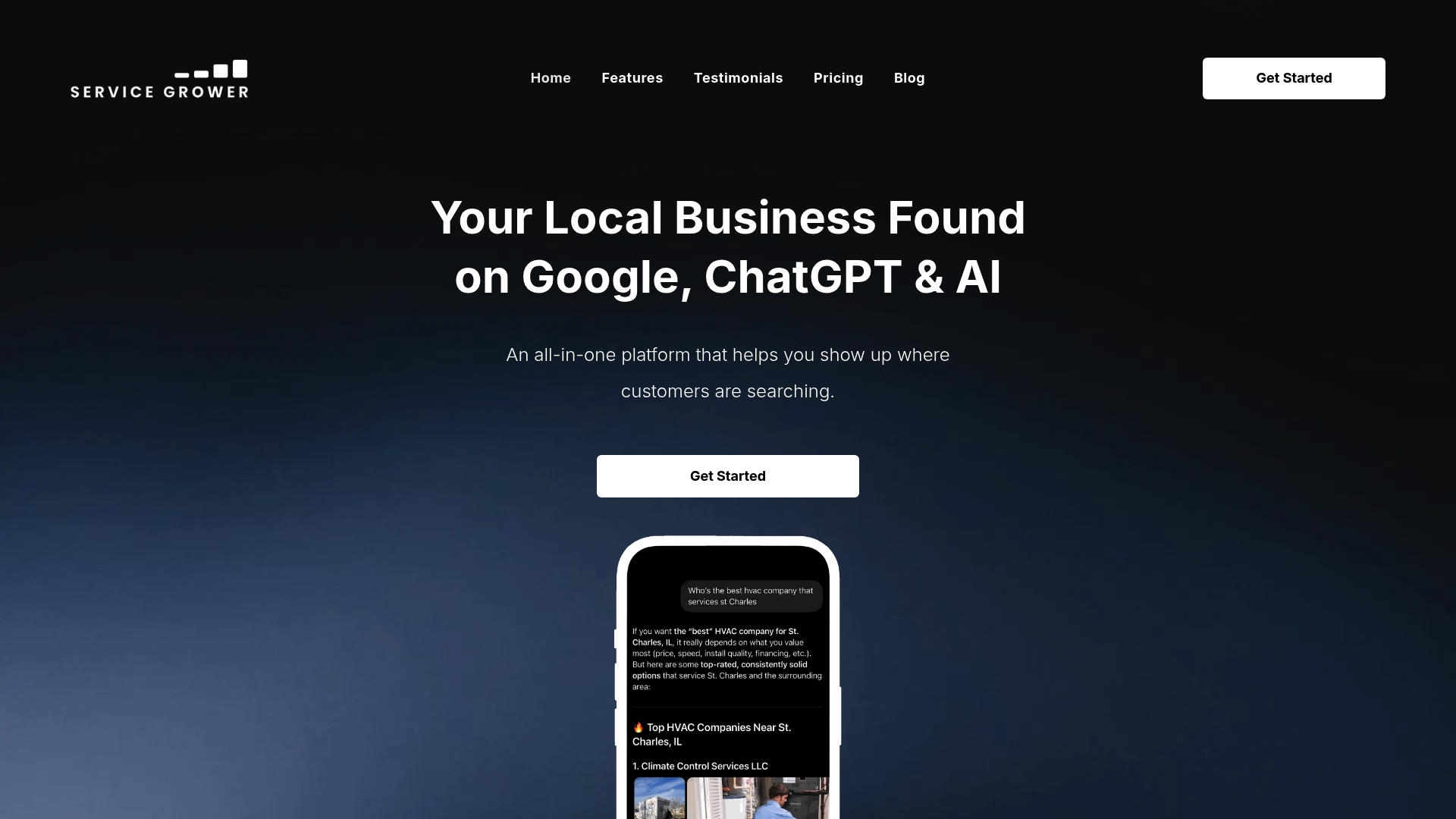
Building a compliant SMS drip program from scratch means stitching together a texting tool, a CRM, booking software, and a consent log, then hoping they stay in sync. Service Grower combines customer messaging, booking through SmartRequest, and review management in one system, so the consent record tied to a contact and the message sequence sent to them live in the same place.
The Service Grower plan starts at $249 per month and includes the platform’s messaging and booking tools, with SMS setup available for a $25 one-time fee. Businesses that want managed campaign execution rather than a self-serve setup can also review Google Ads, Meta Ads, and video services as an add-on. If you are deciding between piecing together separate tools and running everything from one dashboard, compare your options and start with a plan that fits your current volume.
FAQ
What are some examples of SMS drip campaigns?
Common examples include welcome series for new subscribers, cart-abandonment sequences for ecommerce, appointment reminders for service businesses, and post-purchase follow-ups that request reviews or suggest related products. Each uses a trigger, such as signup or checkout abandonment, to start a short sequence of timed messages.
Is cold SMS outreach illegal?
Sending marketing texts without prior express written consent violates the TCPA, and the FCC’s one-to-one consent rule requires that consent be given separately to each seller. Cold outreach without that consent carries real legal risk and is not a safe strategy for marketing texts.
Is SMS marketing getting phased out?
No, SMS marketing remains an active and regulated channel, though rules around consent and revocation have tightened through recent FCC orders. Businesses that follow current consent requirements can keep using SMS drips for nurture and engagement.
What are SMS drip campaigns used for?
SMS drip campaigns automate sequences of texts that nurture leads, recover abandoned carts, remind customers of appointments, and follow up after a purchase. They differ from a single SMS blast because each message responds to a trigger and timing rule rather than going out to everyone at once.
How do I stay compliant when sending SMS drip campaigns?
Compliance starts with collecting prior express written consent using clear, business-specific opt-in language and logging the timestamp and wording shown to each contact. You also need to honor opt-out keywords immediately and monitor complaint rates, since carriers and the FCC increase filtering on traffic that generates spam reports.
Sources
- One-to-One Consent Rule for TCPA Prior Express Written Consent Frequently Asked Questions
- Stop Unwanted Robocalls and Texts | Federal Communications Commission