
 GROWTH GUIDE
Stop Contact Form Spam for Devs With Honeypot and a 2s Time Check
The stack that stops most contact form spam: a honeypot field, server-side rate limiting, and a time-to-submit check, layered together before you ever touch a visible CAPTCHA. Add Cloudflare Turnstile or an AI classifier like Akismet only if spam keeps getting through. This combination blocks the bulk of automated junk with almost no friction for real visitors, but nothing gets you to zero. You still need to monitor results and review quarantined messages weekly.
TL;DR:
- Start with a honeypot field and server-side rate limiting to block most automated spam without adding user friction, then monitor and adjust thresholds weekly.
- Ensure honeypots are hidden off-screen, named with common bot targets, and tested with password managers; never rely solely on
display:nonehiding to trap bots.- Implement rate limits at the server or edge layer, considering IP reputation and shared proxies, to prevent script flooding while avoiding blocking legitimate corporate users.
- Add invisible CAPTCHA solutions like Cloudflare Turnstile only after basic defenses fail against sophisticated bots, ensuring minimal privacy and friction impacts.
- Regularly review logs, flagged rates, and false positives, and avoid automatic deletion by quarantining suspected spam for manual review, maintaining lead quality over time.
Table of Contents
- How Do You Stop Contact Form Spam Right Now?
- How Do You Build a Honeypot Field That Actually Works?
- Why Does Rate Limiting Need to Happen Server-Side?
- When Should You Add Turnstile, reCAPTCHA, or hCaptcha?
- Should You Run an AI Spam Classifier Like Akismet?
- What Metadata Signals Catch Spam Without Extra Friction?
- What’s the Implementation Checklist Nobody Talks About?
- Does Fighting Spam Hurt Your Form’s Conversion Rate?
- How Do You Know Your Spam Defenses Are Actually Working?
- Should You Add Email Verification or Double Opt-In?
- How Should You Log and Analyze Spam Patterns?
- What Legal Rules Apply to Contact Form Data?
- How Do You Block IP Addresses and Ranges Tied to Spammers?
- Should You Use a Third-Party Spam Prevention Service?
- Why Spam Filtering Is Really a Lead-Quality Problem
- Managing Leads and Spam Without Building It Yourself
- Sources
How Do You Stop Contact Form Spam Right Now?
Two defenses catch the overwhelming majority of bot traffic and cost you nothing in user experience: a honeypot field and server-side rate limiting. Deploy those first, watch your logs for a week, then decide if you need anything else.
Here’s the priority order and why it matters:
- Honeypot field — a hidden input that only bots fill out. Free, invisible, and it stops naive scripts before they ever hit your database.
- Server-side rate limiting — cap submissions per IP address so a single script can’t flood your inbox.
- Time-to-submit check — reject anything submitted in under 2 seconds, since no human reads and fills a form that fast.
- Invisible CAPTCHA or AI scoring — add Turnstile, hCaptcha, or Akismet only if the first three layers aren’t enough.
Start with baseline thresholds you can adjust later:
- Cap submissions at a few per IP address per hour, with a tighter per-minute burst limit to stop rapid-fire scripts.
- Flag anything submitted in under 2 seconds as suspicious rather than rejecting it outright.
- Log every blocked or flagged submission for at least a week before tightening any threshold.
Most sites never need to go past step two. Formtorch’s implementation guidance backs this up directly: start with the cheapest, lowest-friction options and only add CAPTCHAs for forms that are actively being targeted.
How Do You Build a Honeypot Field That Actually Works?
A honeypot is a form field invisible to human visitors but visible to automated scripts scanning your HTML. Bots fill in every field they find, including yours. Real users never see it, so they never touch it. When that field arrives populated in your submission, you know it’s spam and can silently discard it.
Effectiveness varies by site and traffic source, but honeypots reliably catch a large share of naive, unsophisticated bot traffic. It’s the cheapest defense you’ll ever deploy, and it costs zero milliseconds of load time.
Getting the implementation right matters more than most developers assume:
- Name the field something a bot would want to fill, like “website” or “phone_number” — not “honeypot,” which sophisticated scripts now scan for.
- Avoid
display:noneentirely. Sophisticated bots specifically check computed CSS and skip fields hidden that way. Use off-screen positioning instead (position: absolute; left: -9999px). - Add
aria-hidden="true"andtabindex="-1"so screen readers skip the field and keyboard users never tab into it. - Set
autocomplete="off"on the honeypot to stop password managers from auto-filling it, which is the single biggest source of false positives. - Never reuse common field names like “email” or “name” for your honeypot. Password managers and browser autofill will populate them for legitimate users, and you’ll silently reject real leads.
Splitforms’ testing on accessible honeypot patterns confirms this off-screen approach over display:none, precisely because bot authors have adapted to the more obvious hiding technique.
Pro Tip: Test your honeypot with a password manager active (1Password, Bictoscash, Chrome’s built-in manager) before launch. If it autofills your hidden field, real users will get silently blocked and you’ll never know why your lead count dropped.
A honeypot alone stops naive bots but does nothing against a human spammer or a script written specifically to target your form. That’s when you add rate limiting.
Why Does Rate Limiting Need to Happen Server-Side?
Client-side validation is a suggestion. A spammer bypassing your JavaScript entirely and posting straight to your form endpoint won’t care what your front-end code checks. Rate limits only work when enforced where the attacker can’t reach them: on your server, or better, at the edge, before the request even hits your application.
Splitforms’ deep dive into edge enforcement recommends putting rate limits at the CDN layer (Cloudflare, Vercel) with an application-level fallback in case the edge rule doesn’t catch it. That two-layer setup means even if someone finds a gap in one, the other still holds.
Baseline thresholds that work for most contact forms: 3 submissions per IP address per hour, with a 5-per-minute burst cap to stop scripted flooding. Tighten these numbers only after you’ve watched a week of real traffic patterns.
Reasonable starting points for most small-to-midsize sites:
- Per-IP cap of 3 submissions per hour, adjustable based on your actual traffic volume.
- A tighter burst limit of 5 per minute to catch scripts hammering your endpoint.
- A per-form access-key cap if you run the same form on multiple pages or domains.
The edge case everyone forgets: shared NAT and corporate proxies. Large offices, universities, and mobile carriers often route hundreds of users through a single public IP. If your rate limit is too aggressive, you’ll block legitimate employees at the same company from submitting your form. Mitigate this with allowlisting for known corporate ranges, exponential backoff instead of hard blocks, and thresholds you can loosen for specific IP ranges without rewriting your whole rule set. Pairing rate limits with an IP reputation list adds another layer of context, flagging known spam sources even before they hit your submission cap.
When Should You Add Turnstile, reCAPTCHA, or hCaptcha?
Add an invisible CAPTCHA only after honeypot and rate limiting stop being enough. If your form is getting targeted by sophisticated bots that render JavaScript and mimic human timing, that’s your signal.
The three main options behave differently on privacy, friction, and false positives:
| Option | Effectiveness | False-Positive Risk | User Friction | Privacy / Tracking |
|---|---|---|---|---|
| Cloudflare Turnstile | High against automated bots | Low | Near-zero, runs invisibly | No third-party ad tracking |
| reCAPTCHA v3 | High, score-based | Moderate on VPN/privacy-browser users | Low, no visible challenge for most | Sends data to Google, tied to ad ecosystem |
| hCaptcha (invisible mode) | High | Low to moderate | Low | Privacy-focused, no ad-network ties |
Splitforms’ comparative testing puts Turnstile ahead on privacy grounds specifically because it doesn’t feed a third-party ad network the way reCAPTCHA does, while delivering comparable block rates.
The best-practice trigger pattern: load the CAPTCHA script lazily, not on every page load, and only verify the resulting token server-side when a submission has already been flagged by an earlier layer. Loading a CAPTCHA script globally adds unnecessary page weight and, for reCAPTCHA specifically, ships tracking cookies to visitors who never even reach your contact form.
Common implementation mistakes to avoid:
- Verifying the token client-side only, which a spammer can simply skip since they control the request.
- Loading CAPTCHA scripts on every page instead of only the contact form, wasting load time site-wide.
- Forgetting to check the token’s timestamp, letting old tokens get replayed on new submissions.
Should You Run an AI Spam Classifier Like Akismet?
Content classifiers analyze the actual text of a submission, looking for spam-signature patterns like link density, promotional phrasing, and template wording bots reuse across thousands of sites. Akismet reports high accuracy when its classifier runs as one layer inside a broader defense, not as a standalone gatekeeper.
The workflow that works best combines signals rather than relying on any single check. Give each submission a composite score built from the honeypot result, the time-to-submit value, the rate-limit status, and the classifier’s content score. A submission that trips two or three of these flags gets quarantined; one that trips a single soft signal might just get a lower priority in your inbox instead of an outright block.
Design your policy around quarantine first, not auto-delete. Splitforms’ recommendation on retraining loops is to hold flagged submissions for review, feed manually confirmed spam back into the classifier, and only auto-delete once you’ve proven a confidence threshold is reliably low-risk. Skip that step and you’ll eventually torch a real customer inquiry that happened to trip a false positive.
Provider considerations matter too. Akismet, for instance, sends form content to an external service for scoring, which is worth disclosing in your privacy policy if you’re processing EU visitor data.
- Combine honeypot, time-check, and rate-limit results into a single composite score before deciding to quarantine.
- Hold flagged messages for review instead of deleting them immediately.
- Feed confirmed spam back into the classifier periodically to sharpen future accuracy.
Pro Tip: Run your classifier in “log only” mode for the first two weeks. Compare its flags against what you manually identify as spam before you let it auto-quarantine anything. This catches misconfigured thresholds before they cost you real leads.
What Metadata Signals Catch Spam Without Extra Friction?
A few lightweight checks add real accuracy without asking visitors to do anything different. Treat these as scoring inputs, not automatic rejections, since any single signal can misfire on a legitimate submission.
- Flag disposable or temporary email domains as a soft signal, not an automatic block. Some real customers genuinely use privacy-focused email services.
- Filter obvious spam keywords and excessive URL counts in the message body, but keep the list conservative. A message mentioning “SEO services” or containing two links shouldn’t get nuked outright.
- Enforce a time-to-submit floor under 2 seconds, and pair it with a JavaScript nonce token that confirms the form actually rendered in a browser rather than getting posted directly.
- Watch for duplicate submissions arriving within seconds of each other from different IPs, which usually signals a script testing multiple proxy endpoints. Quarantine rather than reject outright.
What’s the Implementation Checklist Nobody Talks About?
The most common way spam sneaks past a well-designed stack isn’t a missing layer. It’s an implementation bug in a layer you already built.
- Verify every third-party token (Turnstile, hCaptcha, reCAPTCHA) server-side before saving or emailing the submission. A client-side “success” checkmark means nothing if you never confirm it on your backend.
- Enforce rate limits at the edge first (Cloudflare, Vercel), with an application-level check as backup in case the edge rule gets bypassed or misconfigured.
- Decide your rejection strategy in advance: a fake “success” message for flagged submissions (so attackers can’t tell their spam got blocked and iterate) versus an explicit rejection (which is more transparent but teaches bots what triggers a block).
- Log every score component, store quarantined messages for roughly 30 days, and give someone on your team a review interface to recover false positives before they’re gone for good.
Skipping any one of these steps is how sites end up with a CAPTCHA installed, a honeypot deployed, and spam still landing in the inbox every day. The bugs are almost always in the verification step, not the defense itself.
- Never save or email a submission before verifying every server-side check has run.
- Store quarantined messages with their full score breakdown so you can audit why something got flagged.
- Give at least one team member direct access to the quarantine queue, not just an automated report.
Does Fighting Spam Hurt Your Form’s Conversion Rate?
Every defense you add carries some risk of blocking a real person. The trick is ordering your defenses so the invisible ones do most of the work and the visible ones almost never appear.
Avoid visible puzzle challenges as your primary defense. Anything that asks a visitor to click images or retype distorted text adds friction and measurably hurts completion rates, especially on mobile. Save that as an absolute last resort for a single form under heavy, targeted attack.
The accessible honeypot pattern is worth repeating in one place clearly: aria-hidden="true", tabindex="-1", off-screen CSS positioning instead of display:none, and autocomplete="off". Test it with an actual screen reader (NVDA or VoiceOver) and at least one password manager active before you ship it.
- Run your form through a screen reader before launch, not after a complaint comes in.
- Track submission volume for two weeks before and after any new defense to catch a conversion drop early.
- Keep a rollback plan ready. If flagged-legitimate submissions spike, disable the newest layer first.
Pro Tip: If your form redesign for conversion coincides with a new spam defense, roll them out separately. Otherwise you won’t know which change caused a dip in submissions.
How Do You Know Your Spam Defenses Are Actually Working?
Track a handful of numbers weekly rather than assuming your setup is fine because your inbox looks quieter.

Watch your flagged rate (percentage of submissions caught by any layer), your false-positive rate (confirmed legitimate submissions that got quarantined), total submissions per day, and any shift in conversion rate after a new defense goes live. Splitforms’ testing methodology recommends running a baseline week with logging only, before any layer actively blocks, to establish what normal traffic looks like on your specific site.
A/B testing a new defensive layer is simpler than it sounds: turn it on for half your traffic (or half your form instances, if you run more than one) and compare flagged rates and conversion side by side for a week.
The most common failure mode is a missing server-side token verification, which silently lets every bot through no matter how good your CAPTCHA looks on the front end. The second most common is a password manager or browser autofill quietly populating your honeypot field for real users.
- If spam suddenly spikes, tighten your rate-limit thresholds first since that’s the fastest lever to pull.
- Add temporary geo-based edge blocks if the spike traces to a specific region your business doesn’t serve.
- Quarantine aggressively during a spike rather than outright rejecting, so you can review once the wave passes.
Should You Add Email Verification or Double Opt-In?
Requiring a visitor to confirm their email address before their message reaches your inbox eliminates a huge share of bot-generated spam outright, since most bots use fake or throwaway addresses that never receive or click a confirmation link.
Double opt-in works best for newsletter sign-ups and lead-capture forms where a delayed response is acceptable. It’s a poor fit for a general contact form where someone expects a same-day reply. Forcing every visitor asking a quick question to click a confirmation email before their message gets through will cost you real inquiries.
A middle ground works better for most contact forms: send the message through immediately, but flag any submission using an email address that bounces or fails basic domain validation (no MX records, for instance). That catches obviously fake addresses without making a legitimate customer wait on a confirmation click before you’ll even read their question.
If you do want stricter verification, reserve it for high-value forms where spam volume is genuinely disrupting your team. A quote request form for a service that gets hit by hundreds of scripted submissions daily is a reasonable candidate for opt-in confirmation. A simple “contact us” form on a local service page usually isn’t.
Whichever path you choose, make the confirmation step itself as short as possible. One click, no account creation, no additional form fields. Every extra step between “submit” and “confirmed” loses a percentage of real visitors along with the spam.
How Should You Log and Analyze Spam Patterns?
Raw submission logs without structure are nearly useless six months later when you’re trying to figure out why block rates dropped. Structure your logging from day one around a few consistent fields: timestamp, source IP, which layer flagged it (honeypot, rate limit, time-check, classifier score), and the final disposition (blocked, quarantined, delivered).

Review that log weekly, not just when something goes wrong. Spam patterns shift constantly. A field name that worked as an effective honeypot for months can suddenly stop catching anything once a bot author adds your specific site to their exclusion list. Tracking your flagged rate over time surfaces that kind of drift long before your inbox fills back up.
Segment your logs by which layer caught the submission. If your honeypot’s catch rate suddenly drops to near zero while total spam submissions keep climbing, that’s a signal bots have adapted specifically to your field name or placement, and it’s time to change it.
Keep at least 90 days of aggregated statistics, even if you only retain individual quarantined messages for 30 days per the review policy above. The aggregate view (submissions per day, flag rate by layer, false-positive rate) is what actually helps you spot seasonal spam waves, coordinated attacks, or a slow degradation in one specific defense.
A simple monthly summary works for most small teams: total submissions, percentage flagged, percentage confirmed false positive, and any layer that needs tuning. That’s usually enough to catch problems before they become a flood of missed real inquiries.
What Legal Rules Apply to Contact Form Data?
Any contact form collecting personal information (name, email, phone number, message content) is subject to data protection law wherever your visitors are located, not just wherever your business is based. If you have visitors in the EU or EEA, the GDPR applies to that data regardless of where your company operates.
Third-party spam-filtering services that process form content off your server, including AI classifiers like Akismet, count as data processors under GDPR. That means you generally need a data processing agreement with that provider and a disclosure in your privacy policy explaining that submitted messages get analyzed by a third-party service before delivery.
Practical steps that keep most sites compliant:
- Disclose in your privacy policy that form submissions may be screened by a third-party spam-filtering or classification service.
- Avoid storing quarantined spam submissions indefinitely. A defined retention window, such as the 30-day quarantine period covered earlier, keeps you aligned with data minimization principles.
- Get explicit consent (a checkbox, not a pre-ticked box) before adding a submitter’s email to any marketing list, separate from responding to their original inquiry.
- If you use IP addresses for rate limiting, be aware that IP addresses count as personal data under GDPR in most interpretations. Document why you collect them and how long you retain the logs.
None of this is a substitute for legal advice specific to your business and the jurisdictions your visitors come from. But building these disclosures and retention limits into your form setup from the start is far cheaper than retrofitting them after a compliance question comes up.
How Do You Block IP Addresses and Ranges Tied to Spammers?
Individual IP blocks catch repeat offenders, but the return on effort is often lower than people expect, since most spam bots rotate through large pools of residential or cloud-hosted proxy addresses specifically to dodge single-IP blocking.
Start with IP reputation lists rather than manually maintaining your own blocklist. These lists aggregate reports of known spam sources across thousands of sites and update far faster than any one admin could track manually. Pairing a reputation list with your rate-limiting layer means a submission from a flagged IP gets extra scrutiny even before it hits your per-IP submission cap.
Watch for entire ranges (often called CIDR blocks) associated with data center hosting rather than residential internet service. Legitimate visitors submitting a contact form almost never originate from a cloud hosting provider’s IP range. A submission arriving from an AWS or DigitalOcean address block is a strong signal, though not an automatic disqualifier since some corporate VPNs also route through hosting providers.
Geo-based blocking works as a blunt instrument for a business that only serves customers in specific regions. Apply this carefully, though. Blocking entire countries outright will also catch travelers, remote employees, and legitimate customers using a VPN for privacy reasons.
The most sustainable approach combines all three: reputation lists for known bad actors, rate limiting to blunt any single source regardless of reputation, and geo-signals as a soft scoring input rather than a hard block.
Should You Use a Third-Party Spam Prevention Service?
Running your own honeypot and rate limiter covers the basics, but a dedicated third-party service adds continuously updated threat intelligence that a single site’s logs never accumulate fast enough to match on its own.
Akismet is the most widely deployed example, particularly on WordPress sites, where it plugs directly into form and comment systems to score submissions against a dataset built from millions of sites reporting spam in real time. That breadth is the actual advantage: a pattern first seen on one site gets flagged on yours within hours, not after your own logs happen to catch it.
Integration is usually straightforward. Most services provide an API you call server-side with the submission content, and you get back a score or a binary spam/not-spam verdict within a few hundred milliseconds. The key implementation detail, covered earlier in the token-verification checklist, is making that call before you save or forward the submission, not after.
Before adopting one, weigh a few trade-offs:
- Cost. Most classifiers charge per submission volume once you exceed a free tier, which matters if your form gets hit by large-scale bot campaigns.
- Latency. An external API call adds a small delay to your form’s response time. Keep it asynchronous where possible so it doesn’t block the user-facing confirmation.
- Privacy. Sending message content to a third party means disclosing that in your privacy policy, as covered in the compliance section above.
For most small-to-midsize sites, a third-party classifier is worth adding once honeypot and rate limiting alone aren’t keeping pace with the volume you’re seeing.
Why Spam Filtering Is Really a Lead-Quality Problem
Spam isn’t just an annoyance. It’s a direct tax on your team’s time and attention, and every minute spent sorting real inquiries from junk is a minute not spent responding to an actual customer. Service Grower treats spam filtering as inseparable from lead quality, not a separate technical chore bolted onto a contact form.
The quiet, automated approach outlined throughout this piece, honeypot first, rate limiting second, invisible checks only as needed, matters because it protects the thing local businesses actually care about: a clean, trustworthy stream of leads that staff can act on without second-guessing every submission. A quarantine queue that surfaces flagged items for quick review, rather than silently deleting them, is what prevents a real customer inquiry from disappearing because a spam filter got overzealous.
Integrated systems that combine form handling with lead tracking have an advantage here that a standalone contact form plugin doesn’t: the same dashboard that flags a suspicious submission can also show your team which leads converted, closing the loop between spam defense and actual business results.
— Service Grower
Managing Leads and Spam Without Building It Yourself
Every technique in this piece works, but building and maintaining honeypots, rate limits, and quarantine review queues yourself takes ongoing engineering attention most local businesses don’t have spare. Service Grower gives you that same defense-in-depth thinking built into a single platform, so you spend your time talking to real customers instead of auditing spam logs.
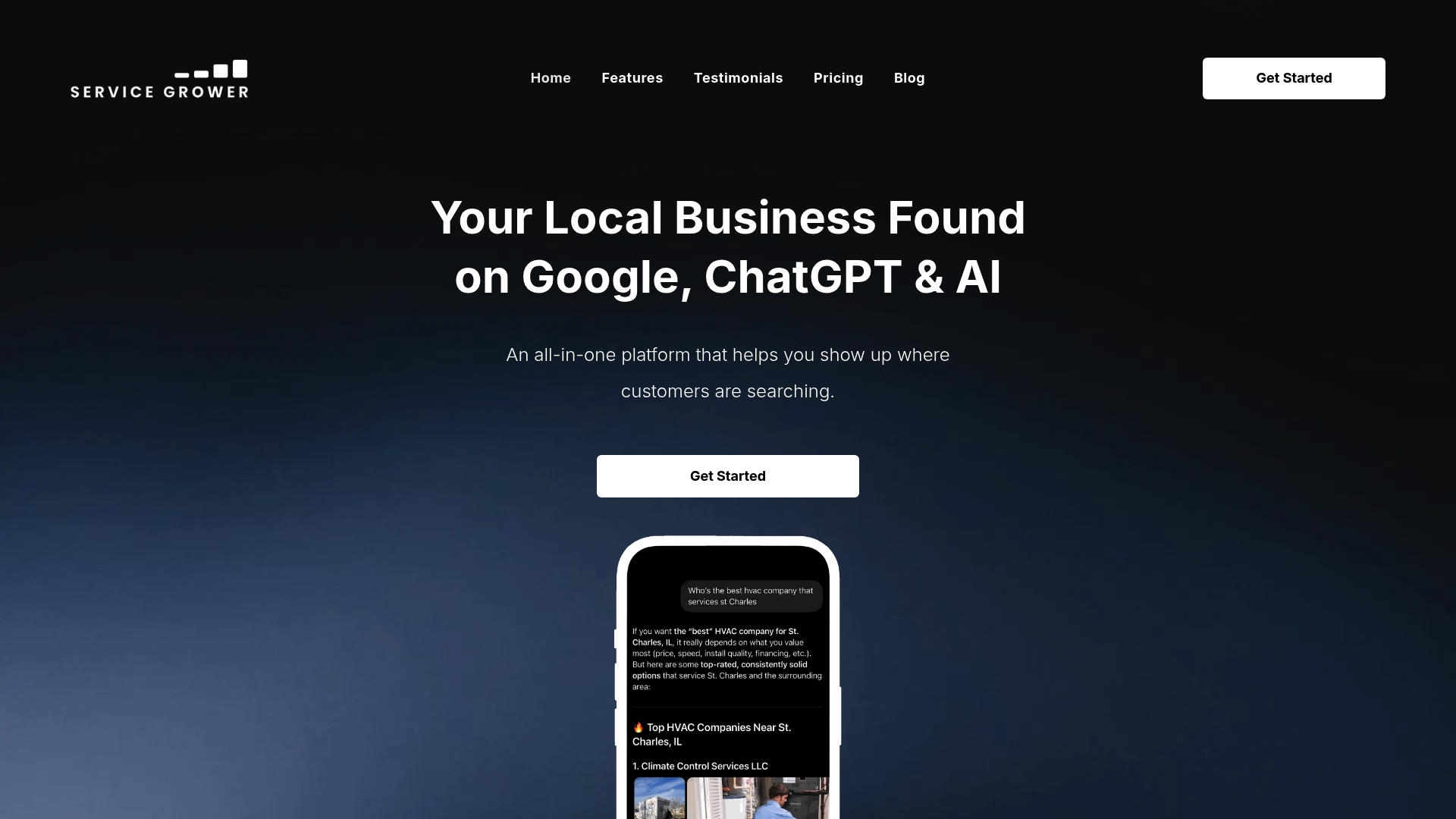
Service Grower’s SmartRequest forms handle the technical filtering automatically, while the lead portal surfaces every flagged submission in a review queue your team can clear in minutes, recovering any real inquiry that got caught by mistake. Paired with GrowthView analytics, you also see exactly how many leads are converting, not just how many messages are landing in your inbox. For a business already juggling lead generation across multiple channels, having spam filtering and lead tracking in one dashboard removes a layer of manual work most owners never planned to take on.
If your contact form is currently a mix of a plugin here and a manual spam check there, book a 15-minute call to see how Service Grower consolidates it into one system, or visit the Service Grower homepage to see the full platform in action.