
 GROWTH GUIDE
4 Prioritized Salon Marketing Channels That Fill Chairs in 2026
The most effective salon marketing mix isn’t 50 scattered tactics. It’s four channels working together: local search optimization, short-form social video, one-click booking, and automated email/SMS retention. Run those in that order and you’ll see it in three numbers: new clients booked, retention rate on the schedule, and average ticket per visit. Everything below is the how.
TL;DR:
- Optimizing your Google Business Profile is the mostROI-driven step, requiring regular updates, service-specific listings, and prompt review responses to stay competitive.
- Creating short-form videos showcasing transformations, behind-the-chair processes, and quick tutorials, geo-tagged with local hashtags, effectively converts views into bookings.
- Setting up automated retention flows, such as appointment reminders, post-visit reviews, and re-engagement messages, reduces no-shows and boosts client rebooking at minimal cost.
- Prioritizing discovery through local search and social media wins over spending heavily on paid ads, which should only boost existing efforts and fill specific gaps.
- Consistent, routine marketing system management with clear ownership and a phased rollout ensures growth while avoiding burnout and system abandonment.
Table of Contents
- Salon Marketing Strategies at a Glance: The Priority Order
- How Do You Optimize Google Business Profile for a Salon?
- What Social Media Content Actually Books Salon Appointments?
- How Do You Set Up Retention Marketing for a Salon?
- Website and Booking Fixes That Turn Visitors Into Clients
- When Should a Salon Pay for Local Advertising?
- In-Salon Promotions and Local Partnerships That Fill Slow Days
- What KPIs Should a Salon Track Every Month?
- Operationalizing Salon Marketing: Systems Over Sporadic Posts
- What Owners Get Wrong About Salon Marketing
- Get a Free AI Visibility Check for Your Salon
- Where This Playbook Comes From
- Sources
Salon Marketing Strategies at a Glance: The Priority Order
Owners get overwhelmed by marketing lists because most lists are unordered. Some tactics move revenue this month. Others help over a year. Here’s the difference, sorted by what actually pays off first.
- Google Business Profile optimization — the highest ROI channel for salons because it captures people already searching “haircut near me” with a wallet open.
- Short-form video (Reels/TikTok) — builds the discovery pipeline that GBP alone can’t, especially for clients under 35.
- Frictionless online booking — every friction point between “interested” and “booked” costs you clients you already earned.
- Automated retention messaging — email and SMS flows that bring clients back without anyone lifting a phone.
- Review generation at checkout — the fuel that makes GBP and social proof compound over time.
- A referral or loyalty program — cheap to run, and it turns your best clients into your sales team.
- Paid local ads — a booster, not a foundation, for slow days or new-service launches.
- In-salon partnerships and events — low-cost ways to generate word-of-mouth in your immediate neighborhood.
If you’re running a one- or two-chair operation with almost no marketing budget, do this in your first week: claim and fully complete your Google Business Profile, post three transformation photos to Instagram, and turn on an automated review request that fires the moment a client checks out. Those three moves alone typically move the needle faster than anything else on this list, according to the framework Booksy’s salon marketing guide lays out for 2026.
Retention deserves more weight than most owners give it. Bringing back an existing client costs a fraction of what it takes to acquire a new one, which is why TheSalonBusiness’s research on salon marketing ideas recommends splitting effort across acquisition, retention, and upsell rather than pouring everything into new-client ads. A salon that only chases new bookings while ignoring the client who hasn’t rebooked in four months is leaking revenue it already paid to earn.
Pro Tip: Before spending a dollar on ads, spend a week auditing what’s already broken. Half the “marketing problem” owners describe is actually a booking-friction or no-show problem that no campaign will fix.
How Do You Optimize Google Business Profile for a Salon?
Your Google Business Profile is the digital storefront that decides whether someone walks in or scrolls past. Fresha’s 2026 salon marketing guide treats it as the primary local discovery asset, and for good reason: it shows up before your website does, in the map pack, with photos, hours, and a booking button all visible before a single click.
Here’s how to get it working for you, step by step:
- List every service by name, not category. Don’t write “Hair.” Write “Balayage,” “Keratin Treatment,” “Men’s Fade.” People search specific terms, and GBP matches on them.
- Fill in accurate hours, including holiday exceptions. A wrong closing time keeps a client from calling you or going elsewhere.
- Add a direct booking link or enable Reserve with Google. This turns a search into an appointment in two taps, no phone call required.
- Upload new photos monthly. Fresh transformation shots, the salon interior, and staff headshots all signal an active business, and Google rewards active profiles with better visibility.
- Post weekly GBP updates. Promotions, new services, or seasonal offers keep the profile from going stale between searches.
- Ask for reviews at checkout, every time. A simple script works: “We’d love it if you left us a quick Google review. Here’s the link.” Text it while the client is still in the chair.
The most common mistake is treating GBP as a one-time setup instead of a living asset. An owner who claims the profile, fills it out once, and never touches it again loses ground to competitors posting weekly. Fresha’s own guidance frames this as continuous maintenance, not a checkbox task. The second most common mistake is ignoring negative reviews. Respond to every one, briefly and professionally, because searchers read the responses as much as the reviews themselves.
Pro Tip: Set a recurring calendar reminder for the first Monday of every month labeled “GBP refresh.” Five minutes of new photos and one post is enough to stay ahead of salons that update once a year.
Tools like Service Grower’s review management platform automate the checkout ask so it doesn’t depend on a stylist remembering to say it out loud.
What Social Media Content Actually Books Salon Appointments?
Short-form transformation video is the single best-performing content format in the salon niche. Fifteen to sixty seconds, before-and-after cuts, a quick reveal set to trending audio. Multiple industry guides point to this format as the primary organic growth engine for salons right now, and Booksy’s salon marketing research backs the same conclusion: static posts simply don’t compete with video for reach.
Three content types consistently convert views into bookings:
- Transformation reveals (15 to 30 seconds) — the before/after cut, color correction, or blowout reveal remains the highest-engagement format across every salon account.
- Behind-the-chair process clips (30 to 60 seconds) — showing the technique itself builds trust with clients nervous about a new service, like a first-time balayage.
- Quick tutorials (under 60 seconds) — a five-second styling trick or product recommendation positions your team as the local expert, not just a service provider.
You don’t need daily posting to see results. Three solid Reels a week, each repurposed into a TikTok and an Instagram Story, covers most salons’ realistic content capacity without burning out a stylist’s afternoon. Film four clips in one slow Tuesday and you’ve got content for two weeks.
Make it locally relevant. Geo-tag every post to your neighborhood, not just your city, and use hashtags a local searcher would actually type, not generic beauty tags with millions of posts burying you on page 40. A caption like “Balayage done in [your neighborhood] this morning” outperforms a generic “New color, who dis?” every time, because it signals to the algorithm and to nearby viewers that you’re a local option.
Test your captions and calls to action the same way you’d test a price point. Run one week with “Book your spot, link in bio” and the next with “DM us to grab this color before the holidays fill up.” Track which one drives more booking clicks and keep the winner.
Pro Tip: Add your booking link to every single video’s caption, not just your bio. Viewers rarely click through to a profile before scrolling past. Make the CTA impossible to miss.
How Do You Set Up Retention Marketing for a Salon?
Five automated flows cover almost every retention gap in a typical salon. Set these up once and they run without a single manual send:
- Welcome flow for new clients, triggered immediately after their first booking, introducing your services and setting expectations for their visit.
- Booking confirmation, sent within minutes of scheduling, to cut down on the confusion that leads to no-shows.
- Appointment reminder, ideally two channels: an email 48 hours out and a text the morning of.
- Post-visit review request, timed for an hour or two after checkout while the experience is fresh.
- “We miss you” re-engagement, triggered automatically when a client passes 12 to 16 weeks without rebooking, which is the window where most churn actually happens.
Segment your messaging by client type rather than blasting everyone the same offer. Color clients on a six-week cycle need a different reminder cadence than a client who comes in twice a year for a trim. Retail buyers respond to product restock notices; occasional visitors respond better to a seasonal offer than a routine reminder.
On channel choice: email and SMS aren’t interchangeable. Gartner’s research on SMS marketing flags text as an unusually high-engagement channel, but that’s exactly why it needs restraint. Reserve SMS for appointment confirmations, reminders, and time-sensitive re-engagement. Save promotional content and newsletters for email, where an unsubscribe doesn’t feel as invasive as an unwanted text. Always get explicit opt-in consent for SMS before you send a single message. This isn’t optional. Compliance issues aside, an over-texted client opts out fast and takes their business elsewhere.
A loyalty program doesn’t need to be complicated to work. A simple punch system, “book your fifth visit and get 20% off,” or a referral credit of $15 for both the referrer and the new client, is enough to raise visit frequency without eating into margin the way a blanket discount does.
Pro Tip: Automate a birthday message with a small perk attached. It costs almost nothing and consistently drives a booking in the same week it’s sent, because it lands exactly when someone’s already thinking about treating themselves.
Website and Booking Fixes That Turn Visitors Into Clients
Your website has one job: get a visitor to a booked appointment in as few clicks as possible. Every extra field, every slow load, every unclear “Contact Us” instead of “Book Now” costs you clients who were ready to buy.
The essentials that actually matter:
- A services page with real names and price ranges, not vague categories.
- Staff bios with photos, because clients pick a person, not just a business.
- A gallery of real work, updated regularly, not stock photography.
- A booking button above the fold on every single page, not buried in a menu.
- Mobile-first design, since most salon searches happen on a phone between errands.
- A booking form with the fewest fields possible. Name, phone, service, time. That’s it. Every additional field drops completion rates.
For a lot of independent salons, a full website rebuild is overkill. A lightweight, AI-optimized page that answers exactly what a searcher wants (hours, services, booking link, reviews) can outperform a bloated five-tab site that takes six seconds to load. Service Grower’s AnswerReady website platform is built around that exact principle: answer the question fast, then get the visitor booked before they change their mind.
A full rebuild makes sense once you’re adding e-commerce for retail products, multiple locations, or a team large enough that individual booking pages per stylist actually matter. Until then, fix friction before you invest in a redesign. Tools that manage booking and confirmation automation, like Service Grower’s appointment workflow, close that gap without a full site overhaul. Partner resources like this local lead generation website design guide walk through the same friction points in more technical detail if you’re evaluating a rebuild.
When Should a Salon Pay for Local Advertising?
Paid ads work best as a booster for specific gaps, not a replacement for organic discovery. Before spending anything, Shopify’s salon marketing research recommends checking what competitors nearby are already doing and pricing, so you’re not bidding blind against an established local player.
Match the ad type to the goal:
- Google Local Search ads target people actively searching for your service right now. Best for steady, always-on new-client acquisition.
- Meta appointment ads (Instagram/Facebook) work well for promoting a specific offer, like a new service launch or a slow-Tuesday discount.
- Boosted short-form video amplifies your best-performing organic Reel to a wider local audience, cheaper than building an ad from scratch.
Set a break-even cost-per-acquisition before you spend a cent. If a new client’s average first visit nets you $80 and typically rebooks three more times a year at $75 each, you can afford to pay meaningfully more than $80 to acquire them and still come out ahead over the year. Do that math for your own numbers before setting a daily budget, not after.
Tag everything. Use UTM parameters on every ad link, unique promo codes per campaign, and a “how did you hear about us” field on your booking form. Without that, you’re guessing which dollar produced which client, and guessing is how ad budgets quietly disappear with nothing to show for it.
In-Salon Promotions and Local Partnerships That Fill Slow Days
Three promotion formats consistently work without training clients to expect a permanent discount:
- First-visit offers for new clients only, like 15% off a first service, which acquire without discounting your loyal client base.
- Weekday happy hours, a modest discount on your historically the slowest afternoon, which smooths out scheduling instead of just adding blanket discounts everywhere.
- Bundled service packages, like a cut-and-color combo priced slightly below booking each separately, which raises average ticket while feeling like a deal to the client.
Local partnerships extend your reach without ad spend. A nearby café that offers your clients a discount, and vice versa, costs nothing but a conversation and a stack of cards at each register. A bridal shop referral relationship works the same way for special-occasion styling. Micro-influencer collaborations with a genuinely local following, someone with 3,000 engaged neighborhood followers, often outperform a broader influencer with 100,000 followers scattered across the country.
Protect your pricing while you do this. Cap promotional slots, put an expiration date on every offer, and never discount your top-performing service, the one that’s already fully booked. Discounting demand you already have just gives away margin for nothing.
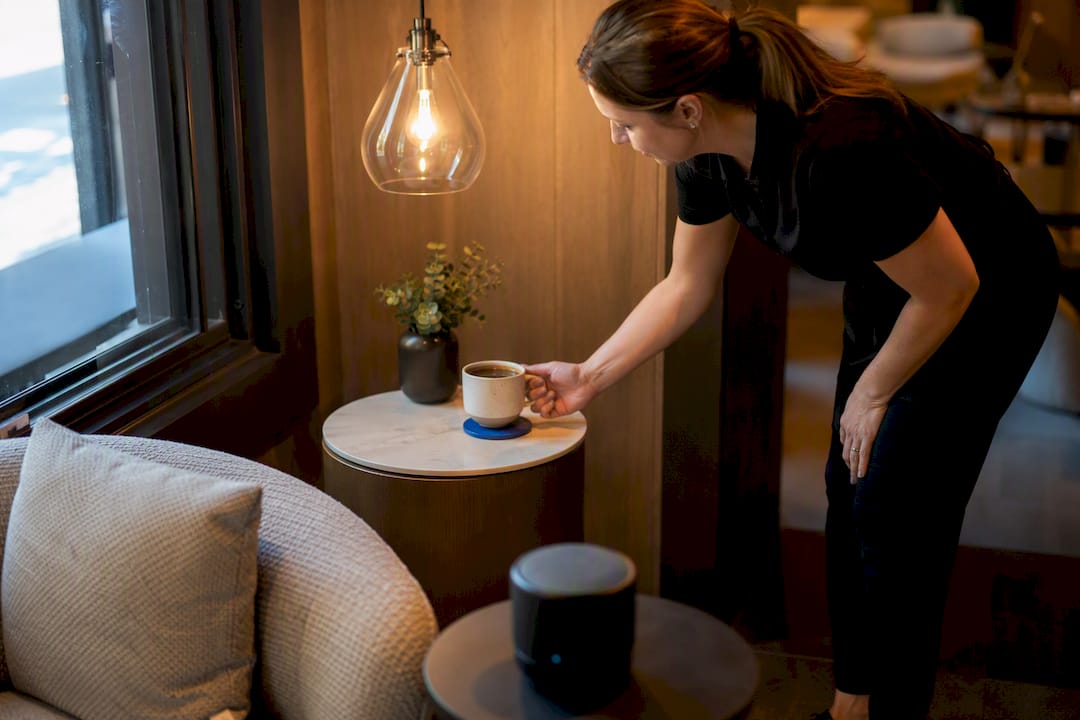
Don’t underestimate atmosphere as part of the pitch. Research on background music and buyer behavior shows environment measurably shapes spending decisions, which means the in-salon experience itself, the music, the wait, the offered coffee, is part of your marketing, not separate from it.
What KPIs Should a Salon Track Every Month?
Six numbers tell you whether your marketing is working: new clients booked, retention rate, average ticket, bookings per stylist, cost per acquisition, and return on ad spend by channel. Track these monthly, not quarterly. A slipping retention rate is a fixable problem in month one and a crisis by month four.
- New clients — how many first-time bookings came in this month, and from which channel.
- Retention rate — the percentage of clients who rebook within their expected cycle.
- Average ticket — total revenue divided by visits, which tells you if upsells and add-ons are working.
- Bookings per stylist — reveals whether demand is unevenly distributed across your team.
- Cost per acquisition (CPA) — total marketing spend divided by new clients acquired.
- ROI by channel — revenue generated against dollars spent, broken out by GBP, social, paid ads, and referrals separately.
Acquiring a new client typically costs several times more than keeping an existing one booked, based on the retention economics TheSalonBusiness outlines, which is exactly why retention rate deserves a spot on your monthly dashboard next to new-client count, not below it.
If retention drops two months running, check your reminder flow first. It’s often a broken automation, not a service quality issue. If rebook rate on a specific stylist’s clients is unusually low, that’s a conversation about their end-of-visit rebooking habit, not a marketing problem at all. Run one experiment a month, one new caption style, one new promo format, one ad type, and give it four weeks before judging it. Changing three variables at once tells you nothing about which one worked.
Operationalizing Salon Marketing: Systems Over Sporadic Posts
Marketing that survives a busy month is marketing that’s assigned, not hoped for. Give one team member ownership of posting, another of chairside review requests, and a named owner of the ad budget, even if that’s you wearing all three hats initially. Document the weekly tasks so nothing depends on memory.
- Monday: schedule the week’s three social posts.
- Every checkout: trigger the automated review request.
- Weekly: check ad spend against the CPA target.
- Monthly: pull the six KPIs and adjust one variable.
A simple automated sequence, discovery through GBP or social, booking through a frictionless form, confirmation by text, a review ask at checkout, re-engagement at week twelve, covers the entire client lifecycle without daily manual effort. Service Grower’s SmartRequest handles the booking-to-confirmation link in that chain, while its reputation management tools automate the review ask that most salons still do manually, or forget entirely.
Pro Tip: Run a 30/60/90 rollout instead of trying to launch everything at once. Days 1 to 30: GBP and booking. Days 31 to 60: social cadence. Days 61 to 90: retention automations. Trying all three simultaneously is how most owners abandon the whole system by week two.
What Owners Get Wrong About Salon Marketing
Most salon owners treat marketing as a task, a post here, a promotion there, when it needs to run more like scheduling: routine, assigned, checked weekly. The salons that grow consistently didn’t find a secret tactic. They just stopped treating marketing as optional homework.
Prioritize discovery before you build a retention system. Getting found is what fills the schedule; retention is what keeps it full. A gorgeous loyalty program on a salon nobody can find on Google solves the wrong problem first.
Start small this week. Fix one GBP field. Turn on one review request automation. That’s the whole mindset.
— Service Grower
Get a Free AI Visibility Check for Your Salon
Most of what’s outlined above depends on one thing working correctly first: people actually finding your salon when they search. Service Grower builds that foundation with AnswerReady websites designed to answer a searcher’s question and get them to a booking button fast, paired with automated review collection so your Google Business Profile keeps building trust without a staff member remembering to ask every time.
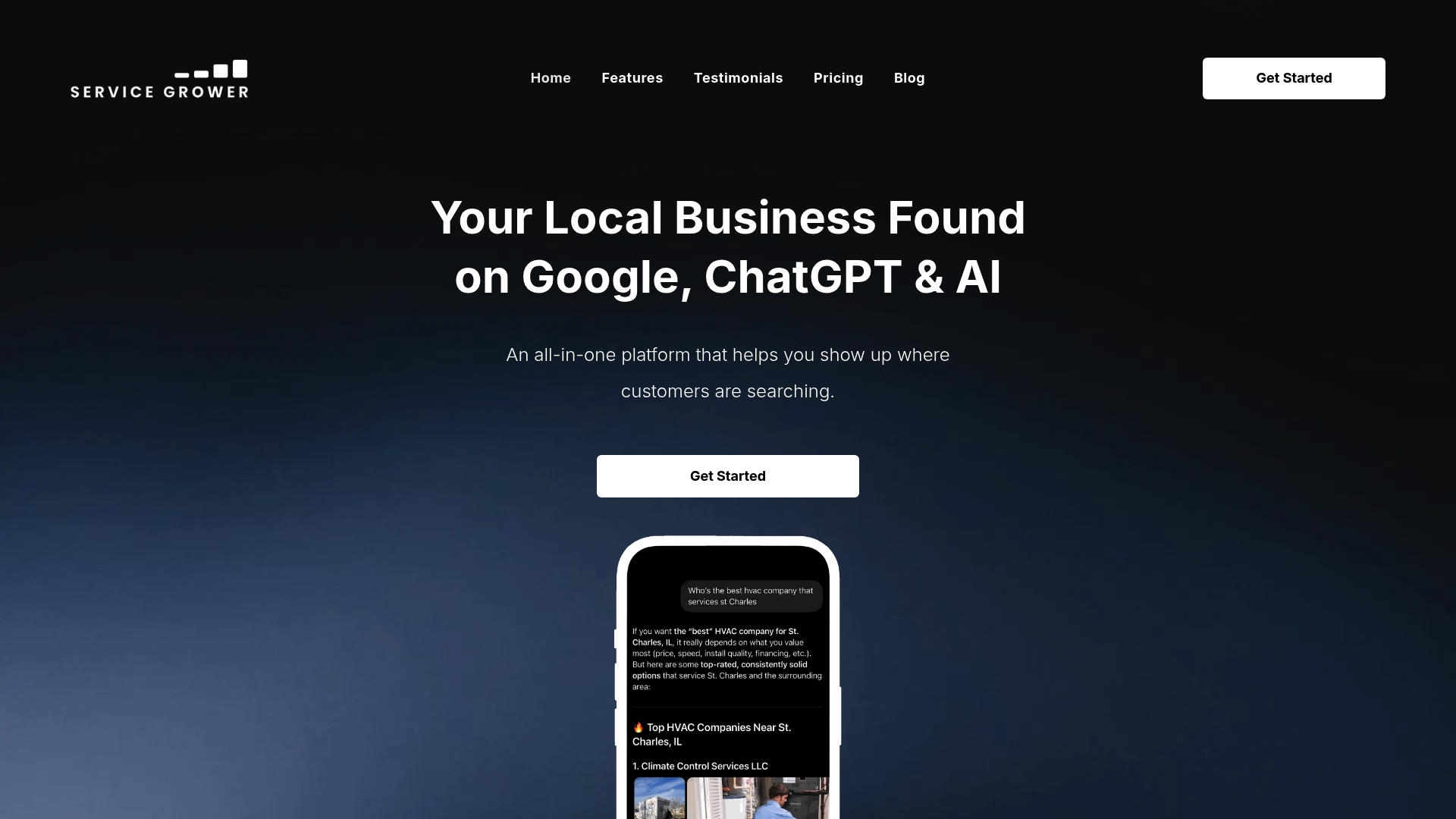
The typical result owners see is straightforward: stronger local visibility, a steadier flow of reviews without chasing clients for them, and more of your website traffic actually converting to booked appointments instead of bouncing. SmartRequest ties the booking and confirmation steps together so a client goes from “found you” to “on the schedule” without extra back and forth.
If you want to see where your salon currently stands, start with a free AI visibility check and find out exactly what’s holding your local search presence back before you spend another dollar guessing.
Where This Playbook Comes From
The strategies above draw on current salon marketing research and platform data, not guesswork. For deeper reading:
- Marketing for Salons in 2026 — Fresha
- Salon marketing — Shopify
- Salon Marketing — Booksy
- 42 Best Salon Marketing Ideas & Strategies — TheSalonBusiness
- Tap into the marketing power of SMS — Gartner
- Marketing Automation Checklist for SMBs