
 GROWTH GUIDE
What Answer Engine Optimization Means for Brand Visibility
Answer engine optimization (AEO) is the practice of structuring content so AI systems like ChatGPT, Perplexity, and Google AI Overviews can parse, extract, and cite it directly. The primary success signal is not a ranking position; it’s whether your brand gets named and quoted inside an AI-generated answer. For marketing teams, that means shifting resources toward extractable, trustworthy content instead of just chasing clicks.
TL;DR:
- AI systems prioritize citation signals such as structured answer blocks and entity consistency over traditional ranking metrics for visibility.
- Content should focus on answer-first formatting, with questions framed as headings and concise, authoritative answer blocks of 40 to 90 words.
- Monitoring AI citations regularly involves running key questions through multiple models and tracking mentions, citation rates, and traffic changes over time.
- Successful AEO requires cross-functional governance, including content updates, schema markup, and ongoing audits of citation accuracy and entity signals.
- Most teams overlook the importance of answer quality governance, which is essential for consistent AI citation growth and long-term success.
Table of Contents
- Why answer engine optimization matters now for brands
- How does AEO differ from traditional SEO?
- What are the best AEO strategies for content teams?
- What technical and trust signals affect extractability?
- How do you measure and monitor AEO performance?
- How do you close the organizational readiness gap?
- How does an AnswerReady approach deliver AEO results?
- Our take: what marketers get wrong about AEO
- Ready to Show Up in AI Answers, Not Just Search Results
- Sources
Why answer engine optimization matters now for brands
The urgency here isn’t theoretical. Gartner projected a 25% drop in traditional search engine volume by 2026 as chatbots and virtual agents absorb queries that used to land on a search results page. That shift changes what “visibility” even means. Traditional SEO optimizes for a ranking position a human scrolls past. AEO optimizes for a sentence an AI model decides to repeat, with or without a click.
The payoff for getting cited looks different too. Some platform research points to a conversion premium for visitors referred by AI answer engines compared to traditional search traffic, likely because someone arriving from a cited answer has already had part of their research done for them. They’re further down the funnel before they ever land on your site.
Three practical shifts follow from this:
- Content budgets need to fund answer-first formatting, not just longer articles.
- Measurement has to expand beyond rankings to track actual citation events.
- Editorial calendars should prioritize the questions people ask AI tools, not just the keywords they type into a search box.
None of this replaces SEO. It sits on top of it, and it changes where your team spends the marginal hour.
How does AEO differ from traditional SEO?
Traditional SEO chases rankings; AEO chases citations. That single distinction reshapes almost everything downstream, from how you write a paragraph to how you measure success.
Traditional SEO rewards long-form pages that build topical authority across thousands of words, with success measured in position, impressions, and organic clicks. AEO instead rewards short, structured answer blocks, typically 40 to 60 words, placed near the top of a section so a language model can lift them cleanly without needing the surrounding context.
Here’s where the two disciplines split and where they overlap:
- Content structure: SEO favors comprehensive pages; AEO favors self-contained sections that each answer one question fully on their own.
- Signals rewarded: SEO leans on backlinks and dwell time; AEO leans on extractability, factual clarity, and consistent entity signals across the web.
- What stays the same: technical crawlability, page speed, quality writing, and topical depth remain load-bearing for both.
- Measurement: SEO tracks rankings and clicks; AEO tracks mentions, citation rate, and AI-referred traffic.
The fundamentals you already built, clean site architecture, strong topical coverage, credible sourcing, don’t get thrown out. AEO asks you to add a layer on top: structure that a retrieval system can quote in isolation.
What are the best AEO strategies for content teams?
The single highest-leverage tactic is what practitioners call the TLDR-Body-Dive pattern: pose a question in the heading, answer it directly in the first 40 to 90 words, then use the rest of the section to give humans the nuance an AI model will skip. Do this consistently and you’re writing for both audiences at once instead of picking one.
Five moves matter most, roughly in order of impact:
- Lead every section and FAQ entry with the answer, not a setup. Save the context, the caveats, and the examples for after the direct answer, not before it.
- Write headings as real questions. Question-based headers measurably increase citation likelihood because they mirror how people phrase prompts to AI tools.
- Keep answer blocks tight. Forty to 90 words is the sweet spot: long enough to be useful, short enough to lift cleanly into a generated response.
- Mark up genuinely useful content with schema. Reserve FAQPage and HowTo markup for questions that are real, visible on the page, and not duplicated across a dozen near-identical URLs, echoing the four-part FAQ structure of answer, context, proof, and next step.
- Govern the answer, not just the page. Assign a canonical version of each key answer, tag it with author metadata, and set a review cadence so outdated facts don’t get quoted by an AI model six months after they stopped being true.
Pro Tip: Run your top ten customer questions through ChatGPT and Perplexity before you rewrite a single page. You’ll often find the model is already citing a competitor’s weaker answer simply because it’s better structured, not better researched.
Governance is the part most teams skip, and it’s the part that keeps this from being a one-time content sprint. Someone needs to own the canonical answer library the way a legal team owns contract templates.
What technical and trust signals affect extractability?
Structured data helps, but it’s not the whole game. Google’s own guidance is blunt about this: it recommends high-quality, accessible content and sensible structured data, while explicitly warning against gimmicks like proprietary “llms.txt” files or chopping content into artificial chunks just to game a retrieval system.
What actually moves the needle:
- Schema types that pull weight: FAQPage, HowTo, and Article schema each signal structure to crawlers, but only when the marked-up content is genuinely visible to a person reading the page, not hidden behind a toggle.
- Accessibility and semantic HTML do double duty. Proper heading hierarchy, alt text, and clean markup help screen readers and AI parsers in the same stroke.
- Indexability and speed still gate everything. Content trapped in JavaScript-only rendering or buried behind slow load times may never get crawled in the first place, let alone cited.
- Entity consistency compounds over time. Bylines, visible update dates, and a stable brand name used the same way across your site, reviews, and social profiles all reinforce that you’re a real, current source worth quoting.
None of this is exotic. It’s mostly discipline applied to things most teams already know they should be doing.
How do you measure and monitor AEO performance?
The core AEO metrics: citation rate, brand mentions in AI answers, AI-referred traffic, and share of voice against competitors on the questions that matter to your category. Track these the way you’d track rankings, on a recurring schedule, not as a one-off audit.
A workable monitoring routine looks like this:
- Run the same set of customer questions through ChatGPT, Perplexity, Gemini, and Google’s AI Overviews on a monthly basis and log who gets cited.
- Pull Google Search Console’s generative AI performance reports alongside a third-party AEO monitoring tool, since neither view alone tells the full story.
- Rank fixes by how often a competitor, not your brand, shows up as the cited source on a high-value question.
- Re-test after every content update to confirm the fix actually changed the citation, not just the page.
The output of this process should be a short, prioritized punch list, not a dashboard nobody opens again.
How do you close the organizational readiness gap?
AEO fails as a side project. It works as a cross-functional program with content, IT, analytics, and sometimes compliance all sharing ownership, because enterprise guidance consistently points to a monitoring gap and a strategy gap as the reason most AEO efforts stall before they start.
A sequence that actually holds together:
- Monitor first. Find out what AI systems currently say about your brand before you touch a single page. You can’t fix a citation gap you haven’t measured.
- Optimize second. Apply the answer-first structure, schema, and entity consistency to the pages where the gap is widest.
- Govern third. Build a content registry of canonical answers, run quarterly audits against fresh prompts, and assign someone to respond when an AI model cites your brand inaccurately.
Pro Tip: Treat a miscitation like a support ticket. If an AI answer misstates your pricing or service area, that’s a fixable content gap, not a permanent liability, but only if someone is actually watching for it.
Accessibility and QA aren’t a one-time technical checklist here. They’re recurring inputs that feed the governance loop every quarter, the same way a security team re-audits infrastructure on a schedule rather than once at launch.
How does an AnswerReady approach deliver AEO results?
Service Grower built its AnswerReady™ Websites around exactly this operational playbook: answer-first content blocks, schema applied where it’s genuinely warranted, and consistent entity signals baked into the site structure from the start rather than bolted on later.

The review and interaction management side matters more than it looks. AI systems weigh consistency and recency, and a business with active, current reviews and a steady stream of answered customer questions sends a stronger trust signal than a static page that hasn’t changed in two years. Clients using the platform have reported measurable increases in bookings and reviews after their sites moved to this structure. For a local business trying to be the answer an AI system gives when someone nearby asks “who does this,” the practical starting point is a visibility audit, a handful of targeted FAQ builds around the exact questions customers ask, and a schema rollout across the pages that matter most.
Our take: what marketers get wrong about AEO
Most of the AEO advice circulating right now treats it like a technical bolt-on: add some schema, write an FAQ, done. That’s backward. The research behind this article points to something more structural: the businesses winning AI citations are the ones treating answer quality as a governance problem, not a formatting checklist.
Here’s the uncomfortable part. Most marketing teams have no process for that at all.
If you do only one thing after reading this, run your top ten customer questions through two different AI models this week. You’ll likely find gaps you didn’t know existed, and that gap is the actual starting point, not the schema markup everyone talks about first.
— Service Grower
Ready to Show Up in AI Answers, Not Just Search Results
Service Grower gives local businesses a shortcut past the trial-and-error most brands go through when they try to build AEO from scratch. Instead of hiring separate vendors for a website rebuild, schema markup, and review management, you get AnswerReady™ Websites, AI visibility management, and reputation tools in one platform.
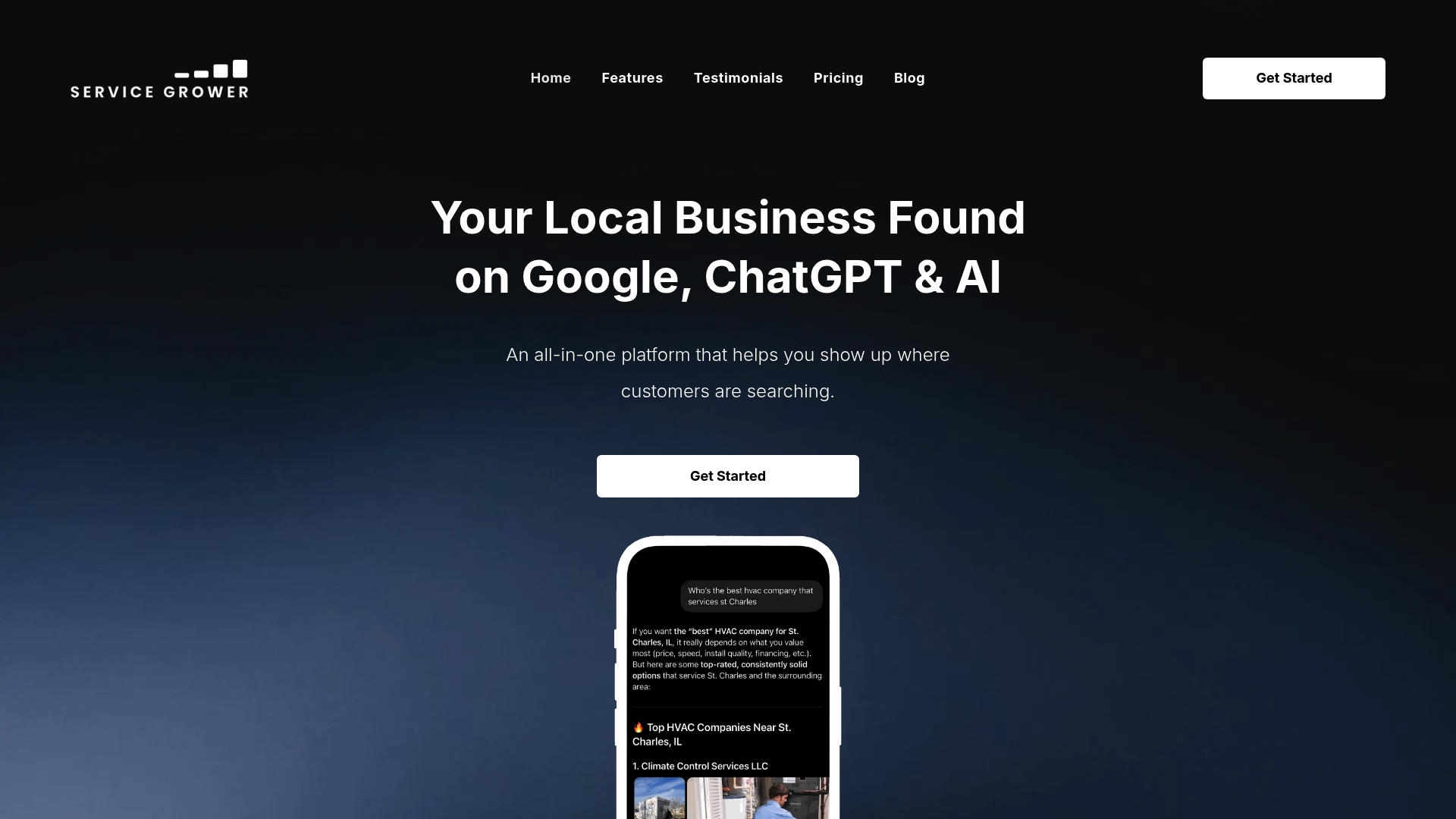
That matters most for local businesses competing to be the answer an AI system gives when someone nearby searches for exactly what you offer, whether that’s a barber, an HVAC company, or a fitness studio. If you’d rather test the waters on the AI side alone first, the BabyLoveGrowth AEO audit tool offers a quick readiness check before you commit to a bigger structural change. But if you already know your site needs answer-first content, consistent schema, and a review pipeline that keeps your entity signals current, the faster route is a direct conversation. Book a 15-minute call and walk through where your current site stands against the AEO checklist covered here.
Sources
- Google Search Central: Guide to optimizing for generative AI features
- Answer Engine Optimization — What Brands Need To Know (Siteimprove)
- Show up in AI search with Answer Engine Optimization (HubSpot)