
 GROWTH GUIDE
Local Businesses: Align Ad Scheduling to Staffing in 60–90 Days
Match your ad hours to when you can actually convert a lead, which for most local businesses means business hours plus predictable high-intent windows like storm season or peak booking days. Running ads 24/7 only makes sense if you have around-the-clock answering or booking capacity, or you serve a long research-and-decide funnel. Before you build a schedule, know that your ad account time zone is fixed and that pacing quirks can undercut even a well-planned schedule, which is why the platform mechanics matter as much as the strategy.
TL;DR:
- Ads should be scheduled during actual business hours and known demand spikes to ensure leads are followed up and not wasted outside staffing capacity.
- Google Ads allows up to six schedule blocks per day, but Smart Bidding may ignore manual time-based bid adjustments when automated strategies are active.
- Local Services Ads automatically deactivate outside listed hours, so mismatch between hours and staff availability results in lost leads or wasted spend.
- Building schedules from your data, analyzing hourly conversion rates, and testing different time slots can significantly improve ad efficiency and reduce wasted budget.
- Managed scheduling services, like Service Grower, automate ad hour adjustments and lead routing, maximizing operational capacity while reducing management complexity.
Table of Contents
- When to run ads: business hours, peak-demand windows, and always-on tradeoffs
- Platform specifics and constraints: Google Ads, Local Services Ads, and Meta
- How to build an ad schedule step-by-step from your data
- Advanced tactics: bid adjustments, seasonality, and event triggers
- Measure, test, and iterate: metrics and evaluation cadence
- Service Grower perspective: operational gains from demand-aligned scheduling
- Managed scheduling and integrated response with Service Grower
- Sources
- FAQ
When to run ads: business hours, peak-demand windows, and always-on tradeoffs
The rule that governs everything else: show ads only when someone on your team can answer the phone, book the job, or fulfill the request. A roofer who cannot dispatch an estimator until Monday morning is wasting money advertising heavily on Saturday night, even if clicks look cheap.
Always-on scheduling is rarely the right default for event-driven local services. It can work, but only when it is backed by real operations: a 24/7 answering service, an after-hours booking form that actually gets checked, or a CRM workflow that texts leads back within minutes regardless of the hour. Without that infrastructure, always-on just means paying for leads that go cold.
Seasonality also plays a role. Pausing spend during a known off-season and concentrating budget on predictable demand spikes, like the first cold snap of the year for an HVAC company, tends to produce a better return than spreading the same budget evenly across twelve months.
A few starting points by vertical:
- HVAC and plumbing: Run ads during business hours plus a few evening hours if you offer emergency dispatch, and spike budget around temperature swings.
- Roofing: Concentrate spend in the days following storms and pause or trim budget during slow, dry stretches.
- Retail with a storefront: Match ad hours to store hours, with a lighter budget in early morning windows when foot traffic is low.
- Appointment-based services (salons, clinics, fitness studios): Run ads when your booking calendar has open slots, and pull back when you are already full for the week.
Pro Tip: Before extending hours, ask whether a real person would pick up the phone right now. If the answer is no, the schedule is more aggressive than your operation.
Platform specifics and constraints: Google Ads, Local Services Ads, and Meta
Each advertising platform handles scheduling differently, and those differences change what a “smart” schedule actually looks like.
In Google Ads, the account time zone is set once and applies to every campaign in that account. You can create a maximum of six ad schedule blocks per day, which is enough for most local businesses but forces some compromise if you want granular hour-by-hour control. Smart Bidding respects your ad schedule settings, meaning it will not spend outside the windows you define, but it tends to ignore manual bid adjustments tied to time of day when a fully automated bid strategy is active.

Local Services Ads work differently. Scheduling is tied directly to the business hours listed in your profile, and you can choose “All day,” “Only during my business hours,” or custom hours. Paid lead generation is deactivated whenever ads fall outside those scheduled hours, so if your listed hours do not match when someone is actually available to answer, you either lose leads or pay for ones nobody follows up on. Our Local Services Ads guide walks through the setup and verification steps in more depth.
Meta Ads add another wrinkle: ad scheduling by day and time is only available when you use a lifetime budget, and the ad becomes eligible to run solely during the times you select. Daily-budget campaigns on Meta cannot be dayparted the same way.
- Multi-location businesses spanning time zones should generally run separate campaigns or accounts per region rather than force one schedule to fit all.
- If that is not feasible, widen your active windows instead of creating narrow, fragmented blocks that are hard to manage and interpret.
How to build an ad schedule step-by-step from your data
Building a schedule from guesswork is how budget gets wasted. Building it from your own data takes a few hours and pays for itself quickly.
- Pull your data. Use Google Ads hourly reports, call logs, booking timestamps, and site analytics. For low-volume accounts, a 60 to 90 day lookback gives you enough signal to avoid overfitting to a single lucky (or unlucky) week.
- Identify your best hours. Look for hours with both a strong conversion rate and an acceptable cost per acquisition, not just cheap clicks. A cheap hour with no bookings is not a good hour.
- Build candidate schedules. Start with a business hours baseline, then test an extended-hours variant only if you have after-hours answering coverage, and a separate event or seasonal spike schedule for known demand surges.
- Implement carefully. Apply schedules at the campaign level, layer in bid adjustments where your bid strategy allows manual control, and label each schedule clearly so you can track which version is running.
- Test before rolling out account-wide. Run a control schedule against a test variant for at least two to three weeks, or longer for lower-volume accounts, before deciding which one wins.
Pro Tip: Label your ad schedules by intent, not just by time, such as “Weekday storm response” instead of “Schedule 3.” It saves confusion three months later when you are comparing performance.
For broader campaign structure and budget planning that supports this kind of testing, see our Google Ads guide for local businesses.
Advanced tactics: bid adjustments, seasonality, and event triggers
Once a baseline schedule is working, a few additional controls can squeeze out more return without adding risk.
Smart Bidding handles most of the hour-by-hour bid optimization on its own, and it respects your ad schedule rather than ignoring it. That means schedules are still worth setting even under full automation: they define the boundaries within which Smart Bidding is allowed to work, which matters when you cannot service leads outside certain hours regardless of how well they might convert.
For short, known events, like a three-day heat wave or a local festival driving foot traffic, seasonality adjustments tell Smart Bidding to expect a temporary shift in conversion rate. They are meant for events lasting roughly one to seven days and are not a substitute for a properly built ad schedule; think of them as a short-term correction layered on top.
Multi-time-zone reach from a single account creates unavoidable friction, since the account time zone cannot be changed after setup. The practical workaround is separate campaigns or accounts per region rather than trying to force one schedule across zones.
- Prepare event-ready creative and landing pages in advance so you can activate a budget spike within hours of a storm, outage, or local incident.
- Increase budget caps temporarily rather than raising bids alone, so the campaign has room to actually spend into the spike.
Pro Tip: Keep an “always ready” creative set for your top two or three demand triggers so you are not writing ad copy while the opportunity is already passing.
Measure, test, and iterate: metrics and evaluation cadence
Scheduling decisions are only as good as the measurement behind them.
Track conversions by hour and day of week, cost per lead, phone answer rate, lead-to-booking rate, and, where you can attribute it, revenue per booked job. A cheap lead that nobody answers is worse than a more expensive one that converts.
- Establish a baseline period before making changes, ideally the 60 to 90 day window you used to build the schedule.
- Run each test for at least two to three weeks to smooth out day-to-day noise.
- For low-volume accounts, combine multiple signals, such as call duration alongside form fills, since any single metric may be too sparse to trust alone.
Once a test schedule outperforms the baseline on cost per lead and booking rate together, not just one metric in isolation, roll it out account-wide and revisit the numbers again after a full season.
Service Grower perspective: operational gains from demand-aligned scheduling
The businesses that get the most out of ad scheduling are rarely the ones with the cleverest bid adjustments. They are the ones whose phones get answered and whose booking forms get checked the moment a lead comes in. Concentrating budget on high-intent windows only pays off when the operational side keeps up, and that gap, more than the schedule itself, is usually where leads get lost.
— Service Grower
Managed scheduling and integrated response with Service Grower
Building and testing a schedule takes time most local business owners do not have between jobs. The Service Grower plan at $249 per month combines managed Google Ads and Meta Ads with a booking and lead-routing system, so schedule changes and staffing capacity stay in sync instead of drifting apart.
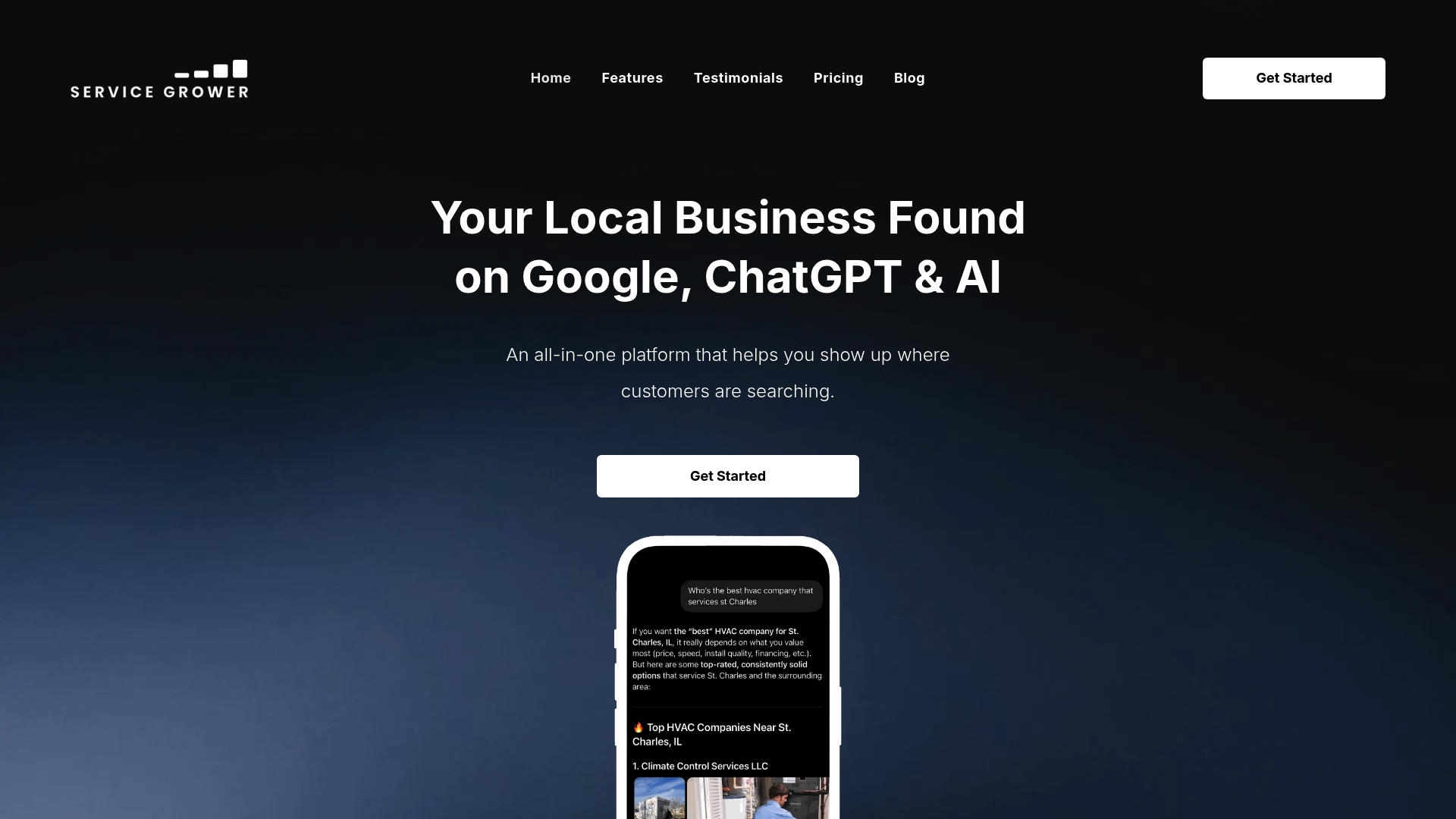
- Managed scheduling means your ad hours adjust automatically as your booking calendar fills or opens up.
- Integrated call routing and follow-up through Email + Text Marketing reduce the odds that a lead outside business hours goes unanswered.
- DIY scheduling works fine if you have the hours to run the analysis every month; a managed setup makes sense when you would rather spend that time on the job itself.
If you want scheduling, bidding, and lead routing handled as one system rather than three separate tasks, check current pricing and plans.
Sources
- Set up an ad schedule - Google Ads Help
- Ad Scheduling: How to Set It Up Right On Google, Meta, & Microsoft Ads
FAQ
What is the best way to advertise my local business?
The most reliable approach combines a strong local search presence with ads scheduled around your actual staffing and booking capacity. Running ads only when you can answer calls or fulfill requests, and pausing during known off-seasons, tends to produce better cost per lead than always-on advertising.
What is the 3-3-3 rule for marketing?
Definitions of the 3-3-3 rule vary across marketing sources, and it is not a standard tied to ad scheduling platforms like Google Ads or Meta. If you encounter it in another context, treat it as a general framework rather than a scheduling standard.
How much does it cost to run a local ad?
Ad costs depend on your industry, location, and competition, and platforms like Google Ads and Meta let you set your own daily or lifetime budget. For a managed option, Google Ads or Meta Ads management through Service Grower is priced at $249 per month per service.
How do I run Facebook ads for a local business?
Set your campaign objective, define your local audience by location, and choose a lifetime budget if you want to control which days and times your ad runs, since Meta requires a lifetime budget for ad scheduling. Keep your ad active during hours when your team can respond to inquiries.
Should local businesses run ads 24/7 or only during business hours?
Most local businesses see better results limiting ads to business hours plus any extended hours they can actually service, since Local Services Ads deactivate lead generation outside scheduled business hours. Running ads around the clock only makes sense with real after-hours answering or booking capacity in place.